Written by Murat Bakur as a part of the book “GEN Z MAKES HISTORY” edited by George Katsifikas, featuring essays about late years revolts around the world. Available FREE pdf of the book here: https://www.eroseffect.com/gen-z-makes-history
__
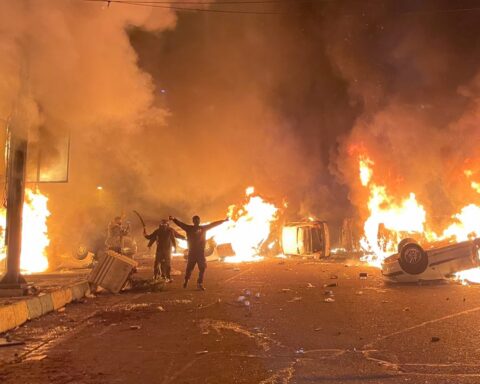
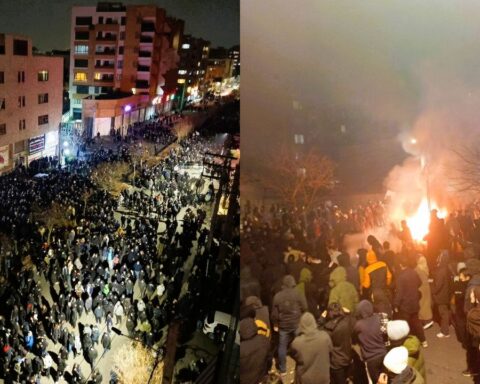
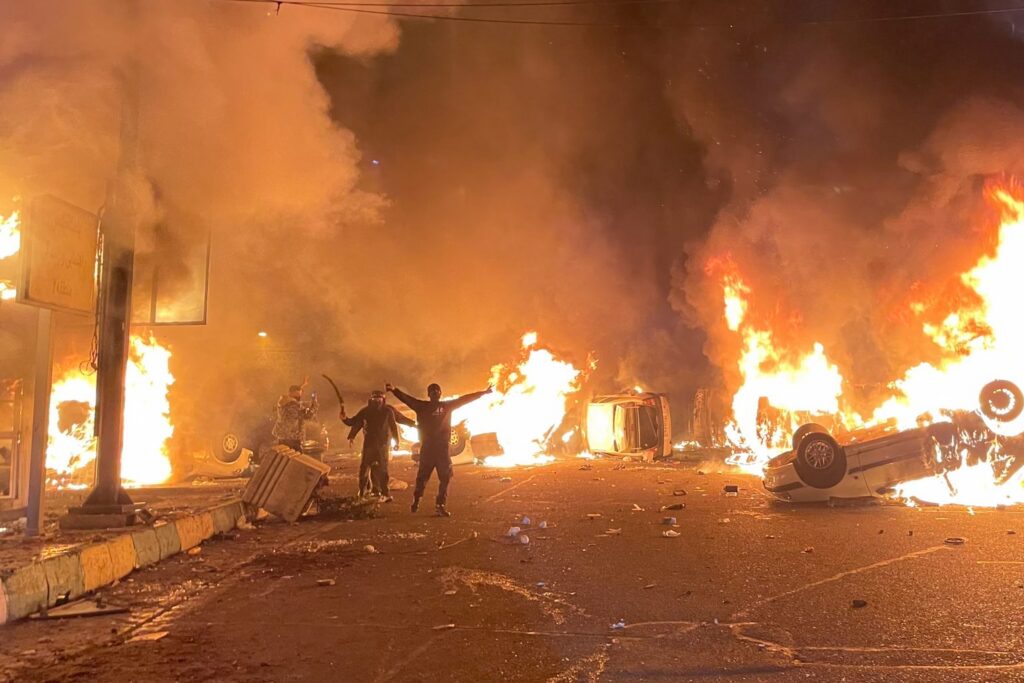
Generation Z was born into the digital age, and the internet has been part of their lives since day one. For this reason, Gen Z is also called the “digital Generation.” Although they have certain widely accepted general characteristics, attempting to describe them through rigid stereotypes can be misleading. Definitions that portray Gen Z solely as a group that only communicates digitally are deceptive. This generation resembles a volcanic mountain ready to erupt, with an unpredictability about when it will spring into action. That observation can be observed in the powerful actions they have already carried out around the world. They have toppled three regimes in Asia and one in both Europe and Africa. In more than 20 other countries, they have compelled governments to reform.
The superficial analyses of Gen Z produced by groups that benefit from the capitalist system—claiming that “Gen Z is individualistic,” “Gen Z is financially oriented,” that they are a “lost generation”—serve no purpose other than attempting to shape and control the new generation, just as has been done with every previous one. We must pay close attention to this. No system wants the incoming generation to disrupt its “tranquil” domination. To prevent this, it creates its own experts and academics who spread theories that discredit Gen Z, while waging special warfare through mindless Tik Tok videos, “realistic” video war games, hard drugs, and other means targeted specifically at young people to blunt their revolutionary edge.
The capitalist definitions of Gen Z reveal cynicism and fears, but many more people greet Gen Z with open arms. Decades of past struggles produced visionaries who welcome Gen Z’s energies and actions.
Characteristics and Shortcomings of Gen Z Actions
Perhaps the most important feature of Gen Z is its ability to organize extremely quickly through digital media and simultaneously to turn organization into action. Globalizing solidarity networks in a very short time, especially in many parts of Asia and the Middle East, they display fearless resistance against entrenched politicians. Unlike previous Gens, Gen Z has no single leader. They organize horizontally. Their leaderless structure makes them appear strategy-less, unplanned, and scattered, which limits their ability to achieve lasting results. Because they lack self-defense planning, they often face extreme violence. When the government changes or when the issues they protest are addressed, their dissent subsides. While a few individuals step up to exert political influence, Gen Z as a group has not generally offered alternative models for qualitative change. In Bangladesh and Nepal, a Nobel Prize winning economist and a former Chief Judge were accepted to lead interim governments. In the next part of this article, I consider the free territory in Rojava, Syria as a genuine alternative to nation-states based upon capitalist partiarchy.
Gen Z has already proven its fearlessness by challenging governments despite enormous state violence. They have paid a high price: more than 2,000 insurgents have been killed and thousands more wounded. The most important task now standing before us is to create a livable alternative, to move from rebellion to revolution. Whenever insurgencies compel governments to retreat or reform, similar regimes inevitably return. Over time they develop corrupt and anti-democratic practices. For Gen Z’s struggles to truly transcend capitalist modernity, it is crucial to have an alternative model of life. Anarchism, feminism, national liberation movements, Marxism, Leninism, Maoism, and previous episodes of class struggles have created a tremendously important history of resistance. Yet Gen Z — one of the major forces of resistance in the new century — needs a 21st Century orientation to make their gains permanent and sustainable. One-dimensional or ideologically “correct” perspectives fragment the movement rather than creating the necessary transformation of existing systems. Facing a multitude of problems, Gen Z needs a holistic system that can shed light on all problems and develop collective solutions.
It is vitally important that Gen Z develops a perspective that takes women’s liberation, class consciousness, grassroots democracy, and an ecological worldview as its foundations. Today, many left and socialist movements lack a strategic approach to women’s liberation. Without resolving patriarchal oppression, no radical solution is possible. Similarly, ecology either has no place or only a very limited place in the ideology of many organizations, even though the pollution and gradual destruction of nature is currently one of the world’s most critical problems.
Against capitalism’s effort to create an individualistic society in which people stay away from social issues and focus on “individual” problems, Gen Z can overcome incessant capitalist assaults by building its own communal culture. To do so requires a radical break from customary everyday life. If Gen Z truly wants a freer society, it must begin with itself. To do that, a radical rupture from the life offered by capitalist modernity is necessary. We must take a stand against the system’s materialist personalities and imposed gluttonous consumer habits, and we must overcome the values that treat women merely as commodities.
Gen Z’s Alternative in Rojava
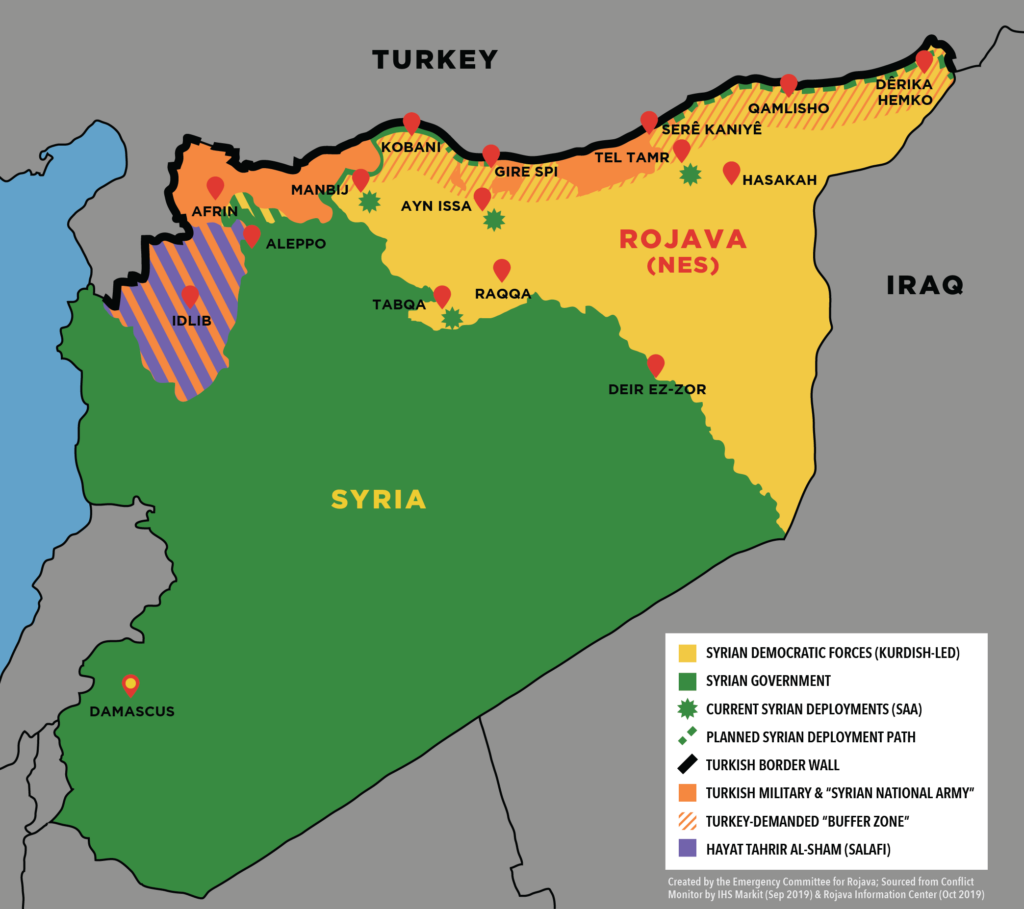
Since 2012, diverse peoples from northern and eastern Syria have come together in Rojava to build exactly the kind of society we need. Although it began as a Kurdish majority region, today Rojava contains a mix of Muslim Kurds, Syrian Christians, Assyrian Christians, Armenian Christians, Yazidis, Turkmen, Muslim Chechens and even atheists. A total of around three million people live harmoniously within a political framework that strives to ensure everyone’s rights are protected, women have equal representation in all organizations, and ecology is a basic principle.
An estimated 40 to 50 million Kurds in the world are divided by Syria, Iraq, Iran and Turkey. Although they lack a nation-state, Kurds have built a variety of political organizations in the four countries where they live. Creatively navigating an international constellation of forces seeking to control them, Kurds became the main ally of all forces who oppose the Islamic State (ISIS). In a region where despotic dictatorships and religious exclusivity reign, Kurds provide a refreshing alternative of diversity, tolerance and free association.
The Rojava Revolution has emerged as an alternative organizational model to nation-states. The Rojava experience is the concrete embodiment of “Democratic Confederalism” — the democratic, women-liberationist, and ecological paradigm developed by the leader of the Kurdish Workers’ Party (PKK), Abdullah Öcalan. This system embodies the paradigm of freedom in an alternative in every aspect of life. Youth, women, all religions, and all languages are free to organize in their own specific ways and live together freely. Although Öcalan and the PKK originally fought for a nation-state, today they have changed both tactics and that goal: they believe in creating liberated democratic confederations similar to the Zapatista caracoles in which people can live freely.

Nation-states are fundamentally militaristic, nationalist, sexist, and religious. Governments have made people dependent on the state in matters of security, administration, and basic needs such as water and food. Democratic confederalism is an alternative created to oppose dependency, and it is an alternative to the nation-state itself. The goal of this system is the liberation of economy, culture, politics, and every dimension of social life—and to develop necessary self-defense to protect hard-won freedoms. The basic organizational forms of confederalism are academies, cooperatives, assemblies, and communes.
Academies play a strategic role in the formation of the educational system. Cooperatives in which members share responsibilities and reap the products of their labor is another fundamental organizational tool to protect society from giant monopolies and establish enterprises owned communally. People have organized themselves into communes and assemblies in every city, every village, and every neighborhood to solve their own problems together in solidarity with one another.
Nation-states monopolize all means of defense in order to control society. That is why self-defense is one of the foundational elements of democratic confederalism. All civilian and political organizations are built from the grassroots. Over more than a decade of repelling attacks by ISIS and other Islamists as well as Erdogan’s Turkish army and air force, more than 11,000 Rojava communards have lost their lives. Many more Iraqi Kurds have also been killed by regimes there.
Internationalist revolutionary youth from many countries of the world (England, Spain, Italy, Greece, Germany, USA, and others) came to Rojava to embrace the Rojava revolution against the threat posed by ISIS. In 2015, the Internationalist Freedom Battalion was formed by Marxist-Leninist, Maoist, and anarchist fighters from outside Syria. Beginning on June 10, 2015, they arrived to support the People’s Protection Units (YPG) against the Islamic State of Iraq and Syria in the Rojava War. Inspired by the International Brigades of the Spanish Civil War, at least 300 international fighters were also killed in the fighting. Most of the militias fought under the umbrella of the YPG before forming into other groups such as the Internationalist Freedom Battalion. Foreigners also helped to create the Rojava Information Center (https://rojavainformationcenter.org).
So, what is the history of the Rojava Revolution?
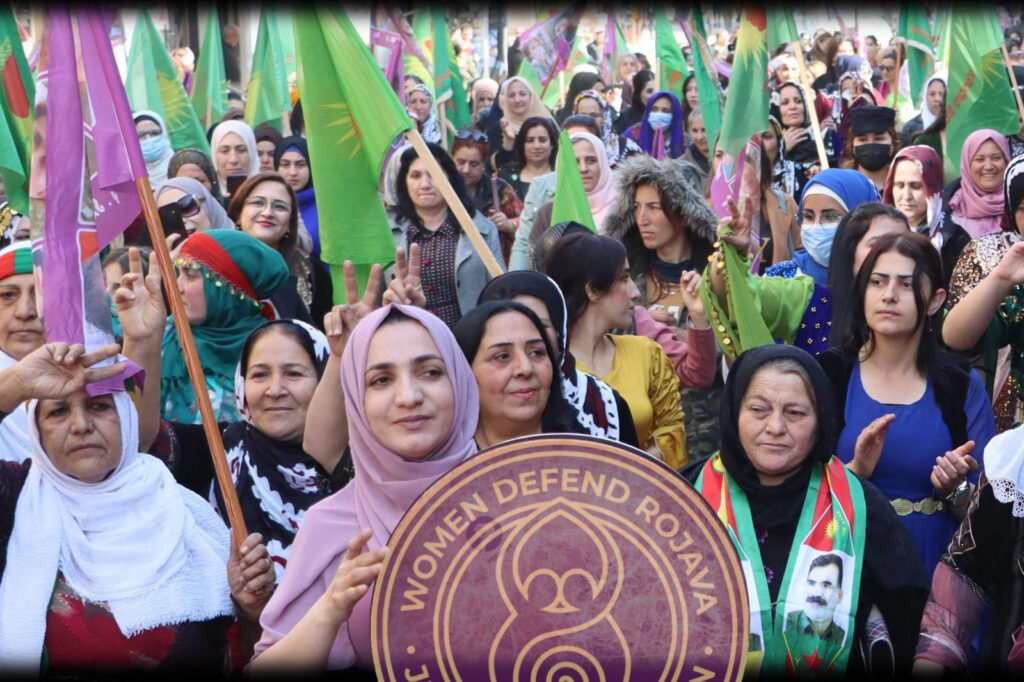
The Rojava Revolution
Just when Gen Z was being born, popular uprisings that began in Tunisia at the end of 2010, spontaneously spread across the Middle East, and became known as the “Arab Spring,” which reached Syria on 15 March 2011. The greatest success of the uprising that turned into a bloody civil war in Syria was the Rojava Revolution. Syrian Kurds neither took the side of the Baath regime nor the gangs formed against it. Choosing the Third Way, the Kurds led the “Spring of the Peoples” with the understanding of a “democratic nation.” Ultimately, they formed the basis of today’s Syrian Democratic Forces (SDF).
To demonstrate their determination for revolution, Syrian Kurds established the Democratic Society Movement (TEV-DEM) and the People’s Council of Western Kurdistan (MGRK) to form their own political unity in the face of attacks from both the regime and the forces described as “opposition.” Originally launched in northern and eastern Syria, Friday marches were held across the country. Following these protests, basic services previously run by the Assad regime were taken over by popular assemblies. In Afrin, language courses in Kurdish, a banned language in Turkey and Syria, were opened. For the first time, Kurdish children enrolled in primary and preparatory schools and received education in their own language.
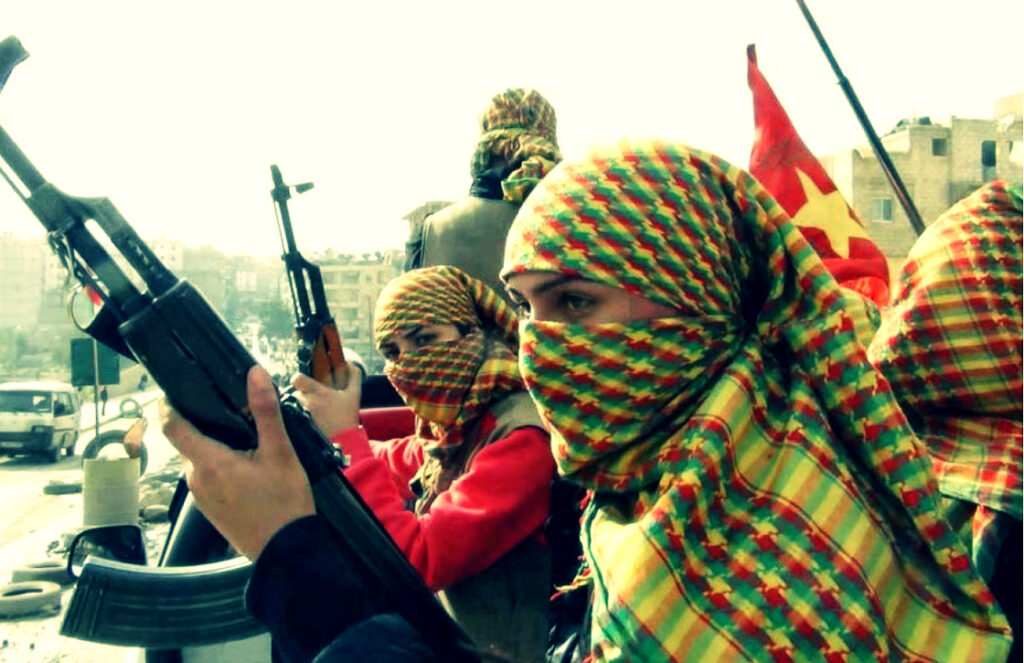
The People Seize Power
On July 18, 2012, a meeting in Damascus, the capital of Syria, was attended by the heads of all major regime institutions. A massive explosion occurred, killing most officials. A day later, regime forces were driven out of Kobanê, led by Kurdish youth and with the participation of the people. Following Kobanê, the people seized power in Afrin, Serêkaniyê, Dirbêsiyê, Amûdê, Dêrik, Girkê Legê, Tirbêspiyê, and Til Temîr. On the same day, the Kurds declared a people’s government in Kobanê, which they named a canton, under the slogan “Democratic Syria, Autonomous Rojava.” July 19 became the starting date of the revolution. The declaration in Kobanê was followed by the declaration of new cantons in Afrin and Qamishli. As fighting intensified, people first formed local defense units and engaged in self-defense activities in the streets. Later, the YPG and Women’s Protection Units (YPJ), were officially established, although their foundations were laid years earlier during the resistance against the Baath regime’s massacres.
The first step taken in 2012 in the liberated areas, cities, towns, and villages was the establishment of People’s Houses. Through meetings and training sessions, people fully grasped autonomous administration. Security emerged as a fundamental concern. On this basis, people began to establish a self-defense system after the first steps of forming small defense groups. Another important task was to improve relations between the region’s divided communities while also taking the first steps to strengthen women’s power and to provide services to all in need.
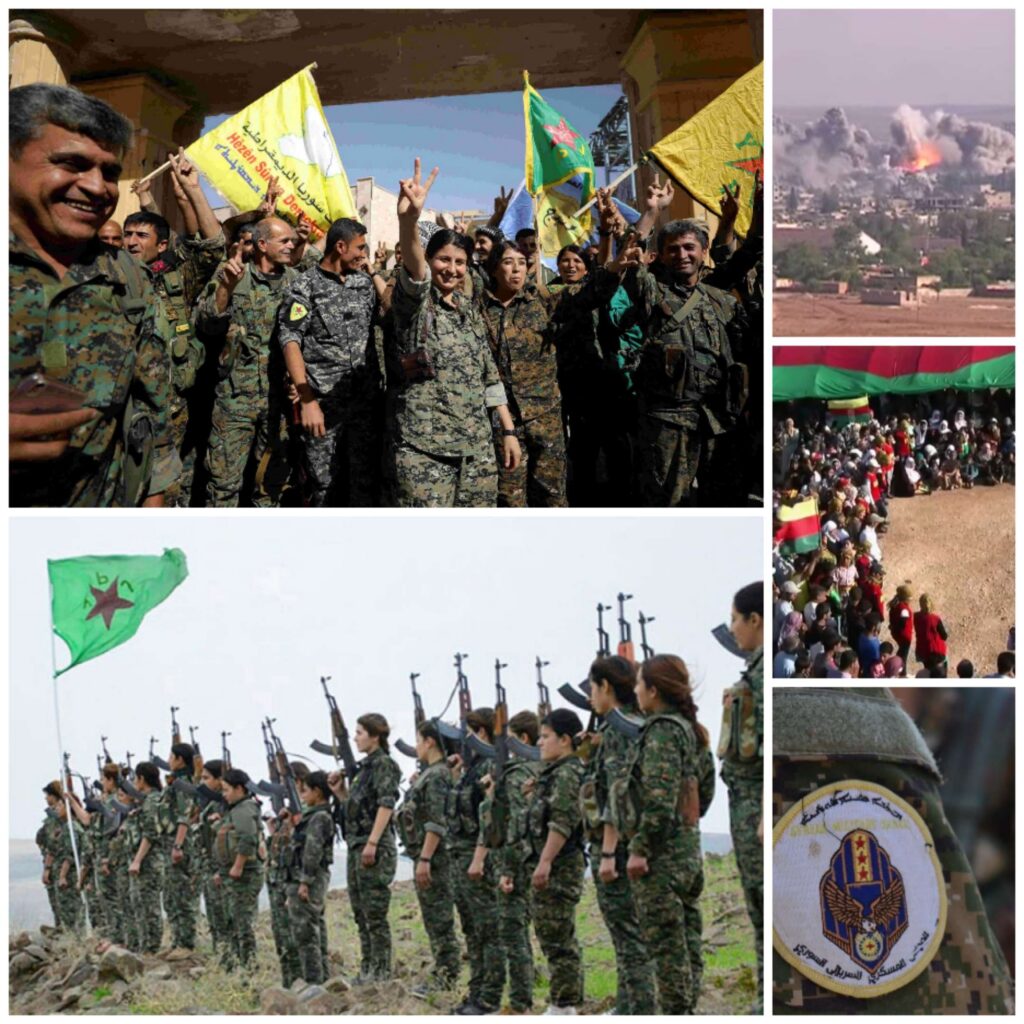
As People’s Houses stimulated grassroots actions, the shape of autonomous administration changed. People’s Houses evolved into broader communes. Thousands of communes were established in villages and neighborhoods. Under the umbrella of these communes, education, defense, health, economy, and social services were provided. Members received training to play active roles, and separate women’s and youth communes were also created. Communes soon transformed into broader organizational structures organized as assemblies. City, village, and neighborhood assemblies were formed, consisting of representatives from communes, political parties, and municipal service institutions. Neighborhood assemblies were merged into city assemblies, and similar steps were taken at district and town levels. In December 2013, the first conference of city, district, and town assemblies was held, and a co-chair system was adopted for assemblies and communes, according to which every assembly, commune, and institution would have one female and one male co-chair. This dealt a major blow to the male-dominated mindset that had ignored women for years. Young people have continually played a major role in expanding democracy in Rojava.
Joint struggles were waged to unite ethnic and religious groups in the region, and significant progress was made fighting the provocations of Nusra (an affiliate of Al-Qaeda). The ISIS attack on Kobanê in 2014 was defeated through the unity of all peoples, beliefs, and different ethnicities in Northern and Eastern Syria. Years of fighting galvanized military units and command structures. The creation of joint administrations to establish a free and equal lives further strengthened the military forces under the umbrella of the Syrian Democratic Forces (SDF). In Rojava, one observer noted “a novel synthesis, a militant vertical organization empowers a communal, horizontal politics.”[1]
After this revolutionary advance, education in peoples’ mother tongues was intensified. Approximately 100 schools were opened in the region, and approximately 1,000 teachers were trained. Significant research on regional culture was initiated. Cultural and artistic centers with music groups, folklore, theater, and children’s groups were established. Committees were established to meet the needs of the people and address social, legal, and economic issues. A “justice committee” was established as an alternative to the Syrian legal system. Furthermore, a “social justice department” was created within the Mesopotamian Academy of Social Sciences on April 4, 2013, to improve the legal system.
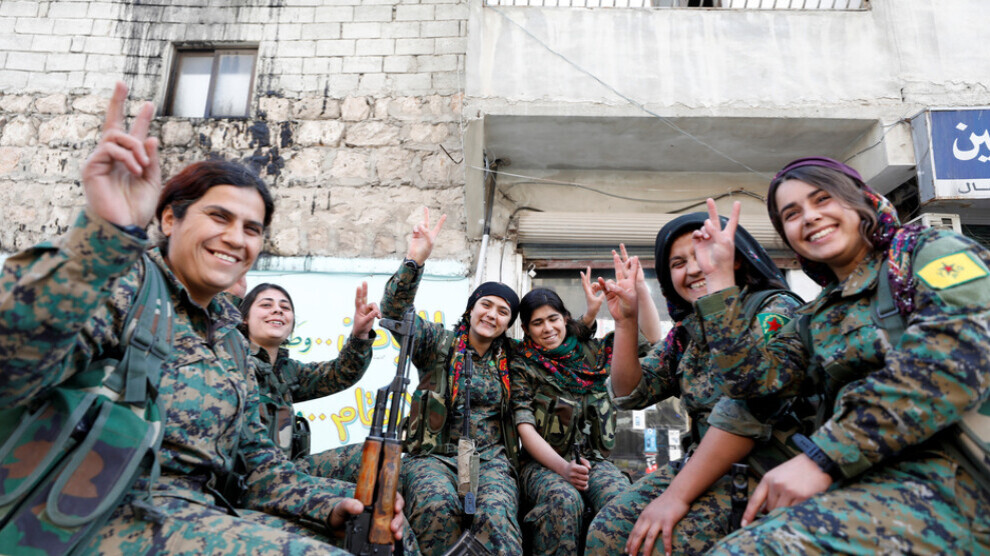
Women’s Organizations
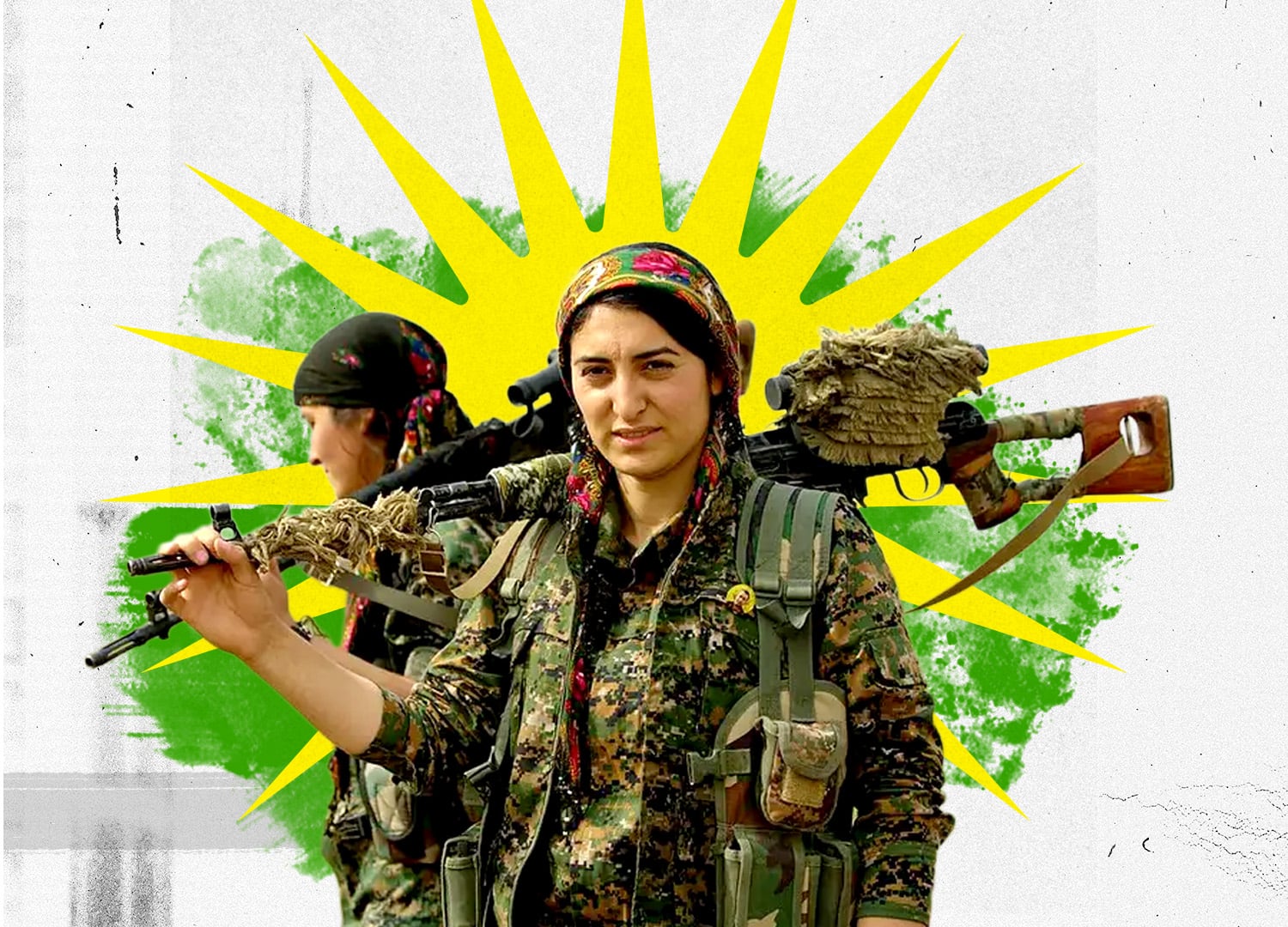
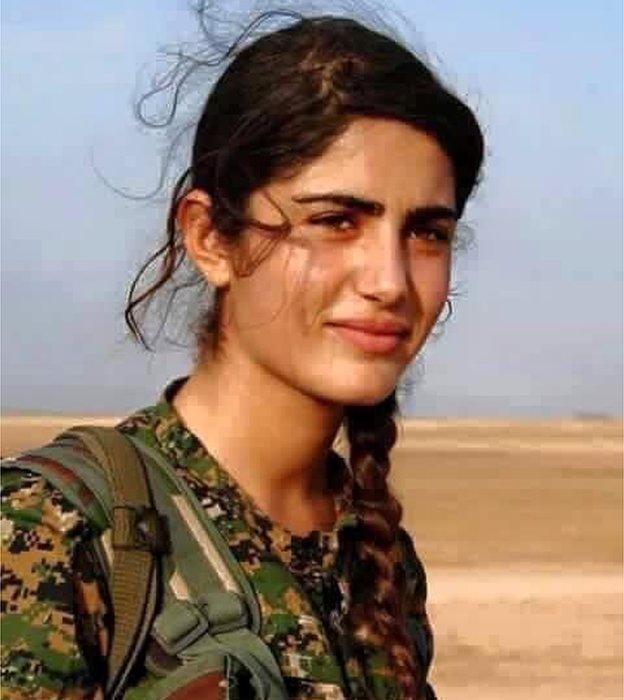
Female combatants have been centrally important to the defense of Rojava. Active since the beginning of the revolution and organized under the name Yekîtiya Star,[2] they created women’s assemblies and women’s houses. Priority was given to women’s representation in people’s assemblies, and women’s science-education centers and academies were opened in many cities. Women took their places in all administrations under the co-chair system and played active roles in education, family, politics, economy, and public security through women’s institutions.
Due to embargoes imposed on the region, the population facing severe shortages of medicine, flour, fuel, and other daily needs. To organize aid coming from abroad, the Kurdish Red Crescent (Heyvâ Sor) was established to break the embargo, build a non-capitalist system, and solve daily problems. In 2013, the Economic Development Institution for North and East Syria was founded. Aiming to develop an economy based on the people, this institution gave priority to cooperatives, starting in Kobanê and Dêrik.
At the end of 2013, the autonomous administration system recognized Kurdish, Arabic, and Assyrian as official languages. Other linguistic constituencies were granted the right to learn their own languages. Women’s representation in institutions was set at a minimum of 40%, and the participation of all regional components built on three pillars: Legislative Assembly, Executive Council, and High Court. All this multi-ethnic diversity has provided challenges that demand compromises, such as reversing a ban on polygamy in Arab-majority regions. In the fight for Kobanê, the SDF agreed to accept the offer of US air cover.
Youth’s Ownership of the Rojava Revolution
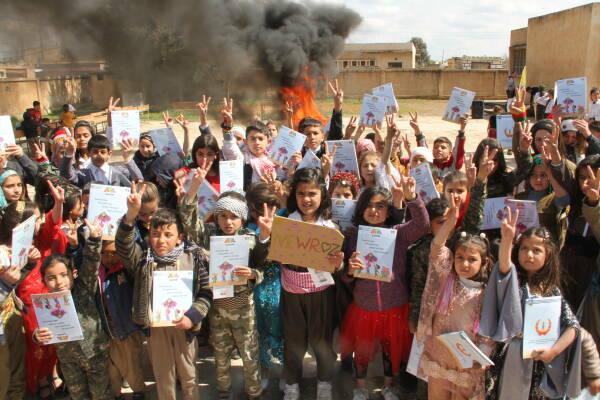
The second Middle East Youth Conference was held in Kobanê on February 20, 2019. Organized under the slogan “Toward a colorful and democratic Middle East under the leadership of youth,” the conference hosted more than 300 delegates from the four parts of Kurdistan, as well as Syria, Iraq, Jordan, Lebanon, Palestine, Libya, Armenia, Egypt, Turkey, Tunisia, Yemen, North Africa, and Sudan. The economic, political, and social crises in the region were discussed within the framework of capitalist modernity. In this context, solutions to the deadlock facing the Middle East were debated from fresh, youthful perspectives. At the end of the conference, steps were taken toward establishing a coordination council among youth organizations and developing joint political actions.
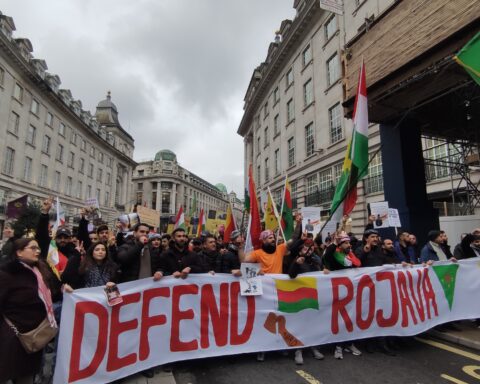
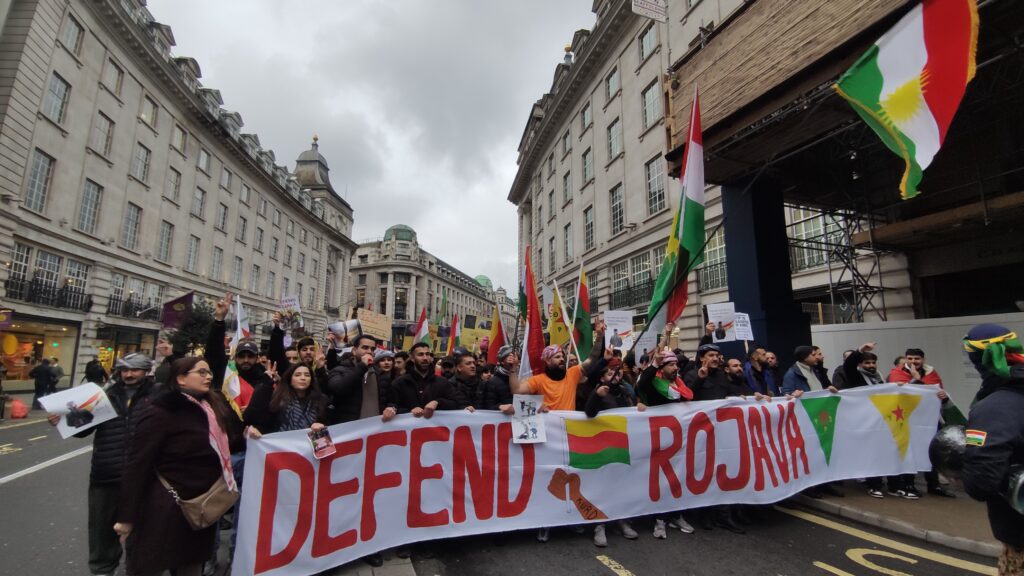
Led especially by Generation Z, young people organized the First World Youth Conference in Paris, France, between November 3–5, 2023. The conference brought together 400 delegates representing 95 youth organizations from 49 countries worldwide. Alongside participants from many European countries, young people from the Philippines, Kyrgyzstan, Sudan, Kenya, Mali, the United States, Mexico, Peru, Chile, Argentina, Brazil, Colombia, and Ecuador met with youth from the four parts of Kurdistan. The discussions and exchanges during the conference were strongly endorsed the demand for freedom of imprisoned Kurdish leader Abdullah Öcalan. The problems faced by revolutionary youth around the world were central to the agenda, emphasizing the importance of struggling together against the fragmentation created by the system. During the conference, solidarity was declared with all oppressed peoples, particularly the Palestinian people and the Kurdistan freedom movement. It was also stated that a common struggle would be carried out to protect the gains of peoples in Rojava and in many parts of the world.
Within the Democratic Autonomous Administration of North and East Syria, young people work in a distinctively autonomous manner. There is no imposition or top-down direction on youth councils or youth institutions in any field. Youth organizations determine their own forms of organization and modes of action. Education, organizational activities, as well as cultural and sports programs for young people are coordinated directly by youth councils themselves. As the pioneering and driving force of the revolution, youth take an active role in post-war reconstruction efforts, organize aid campaigns for those affected by war, and carry out support and play activities for children. Within the framework of women’s liberation, young people organize activities for November 25, the International Day for the Elimination of Violence Against Women, as well as marches, panels, and street actions on March 8, International Women’s Day. The struggle against patriarchal mentality stands at the center of youth work.
In the field of culture and arts, young people play an important role in preserving the cultures of peoples by organizing music and theater festivals that include all communities and cultures, as well as photography, cinema, and painting workshops. Youth also carry out significant activities on ecology by organizing meetings, actions, and events such as tree-planting campaigns and repairing damage caused to nature by war. Through the sports tournaments they organize, youth contribute to social solidarity and healthy living. In addition, by holding commemorative events on the anniversaries of massacres and attacks to honor those who lost their lives, youth take the lead in keeping social memory alive.
Ecology in Rojava
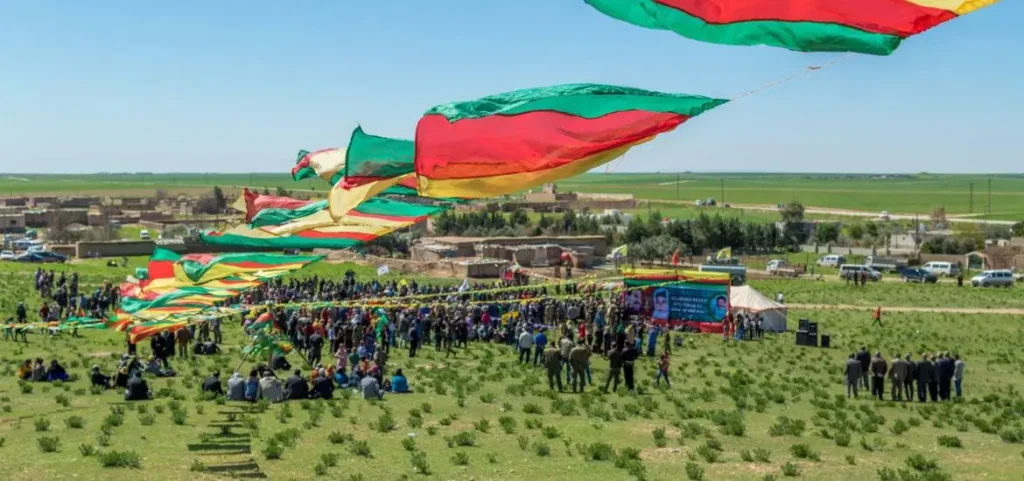
Ecological work in Rojava faced significant obstacles in the implementation of many projects due to attacks from various jihadist groups and Turkey. Nevertheless, significant progress has been made in the ecological field. The first steps towards ecological production were taken by the village communes that began to form in 2012. In 2014, cooperatives were established to secure the food supply, and the first decisions were made to reduce the use of chemical fertilizers and pesticides.
The Ecology Committee was officially established in 2015, and local programs began to be developed. In 2016, a large-scale campaign aimed at planting hundreds of thousands of trees was launched. Starting in 2017, solar panel projects were developed to address power outages. Solar energy systems began to be installed at homes and cooperatives. In 2018, Jinwar, a women-run ecological village, was officially opened. This village is based on organic farming, natural building materials, solar energy, and collective living. In 2019, initiatives were launched to preserve local seeds and develop agricultural practices that reduce chemical use. Small-scale organic farming trials have begun. In 2020, campaigns against environmental pollution and waste management programs were launched. Local campaigns to reduce plastic use were also launched. The Keziyên Kesk (Green Braids) Initiative was established in September 2020 to combat the ongoing environmental destruction in North and East Syria and increase soil productivity. Its work aims to help the people of North and East Syria become more self-sufficient in agriculture, thereby strengthening their resilience to embargoes. In collaboration with the Ministry of Education in North and East Syria, it has ensured that every school has a teacher teaching social ecology. As part of the “Lungs of the Village” project, millions of saplings were planted, and teams visited villages to explain the ecological destruction and how it can be reversed. In 2021, following the region’s water crisis and the decline in the Euphrates River’s flow, an emergency ecological plan was developed. Turkey regularly disrupts the flow of the Euphrates River, posing a serious threat to the region. This impacts not only agricultural activities but also access to clean drinking water. In response, water conservation campaigns were conducted, alternative irrigation methods (drip irrigation and the use of recycled water) were promoted, and local water communes were established. Solar-powered irrigation systems were expanded, and organic agricultural production increased.
Approximately 500,000 hectares of land previously under the control of the Assad regime have been consolidated into public land. According to a report by the Public Land Administration dated December 20, 2023, approximately 80% of this land has been allocated to agricultural cooperatives, women’s institutions, families, forests/afforestation, parks, associations, and camps for internally displaced persons. Fifty per cent of the population’s vegetable needs are now met locally. Products are delivered directly to the public at fair prices through cooperatives. More than 140,000 fruit trees have been planted to increase fruit production. Production, processing, and distribution continue through cooperatives.
Rojava is now nearly self-sufficient olive oil production, along with wheat, flour, bulgur, pasta, and lentil processing facilities. The Economic and Agricultural Councils continue to work on sugar, sunflower, soybean, and cotton processing and textile production facilities. Significant progress has been made in dairy production through agricultural cooperatives; dairy processing facilities now produce cheese, yogurt, and butter. While Rojava fully meets its red meat needs, it has not yet achieved self-sufficiency in white meat. Ecological production principles continue to be implemented to secure the food supply for the people of North and East Syria.
Recognition of the Revolution
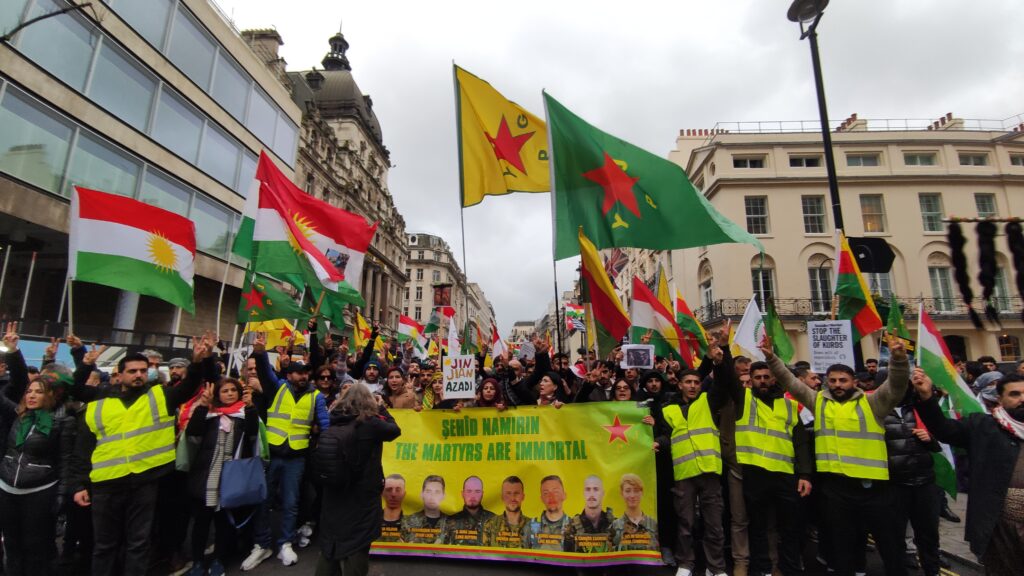
No UN member state has officially recognized Northern and Eastern Syria. However, in October 2021, the Catalan Parliament voted to officially recognize Northern and Eastern Syria. Catalonia thereby made history as the first parliament to recognize the Rojava Revolution. With this decision, Catalan MPs declared their friendship with the Kurdish people and their opposition to Turkey’s occupation policies.
While the Rojava Revolution inspires worldwide opponents of ethnocentrism, religious fundamentalism and global capitalism, some local, regional, and global powers are also hostile to the outbreak of freedom, particularly the Turkish government of Recep Tayyip Erdoğan. Turkey began attacking the free life of people whom they labelled “terrorists” both directly and through paramilitary proxies. With international support, Turkey continues its attacks unabated to this day. In recent years, it has been carrying out these attacks using armed drones.
Despite years of attacks by Turkey, its affiliated paramilitary forces, and ISIS, a significant ecological revolution led by Gen Z has been achieved in North and East Syria. In the face of ongoing threats and embargoes, the revolution is progressing step by step through communes. With its pillars of democracy, women, and ecology, the Rojava Revolution stands before us as an alternative that Gen Z can create elsewhere in the pursuit of freedom.
___
Murat Bakur is a journalist and writer from Northern Kurdistan. His first novel, “Open Blue Freedom,” won second prize in the 5th Deniz Fırat Story and Photography Competition. Several of his short stories have been published by various news agencies. He continues his journalistic work at Medya Haber TV.
[1] Matt Broomfield, Hope Without Hope: Rojava and Revolutionary Commitment (AK Press, 2025).
[2] Formed from the combination of the words “Star” (goddess) and “Yekîtiya” (unity), the name means “Union of All Goddesses” or “Union of Women.”