Calls for international solidarity as the Kurds in Northeastern Syria face existential threat
Report by Blade Runner~ Photos by Void Network
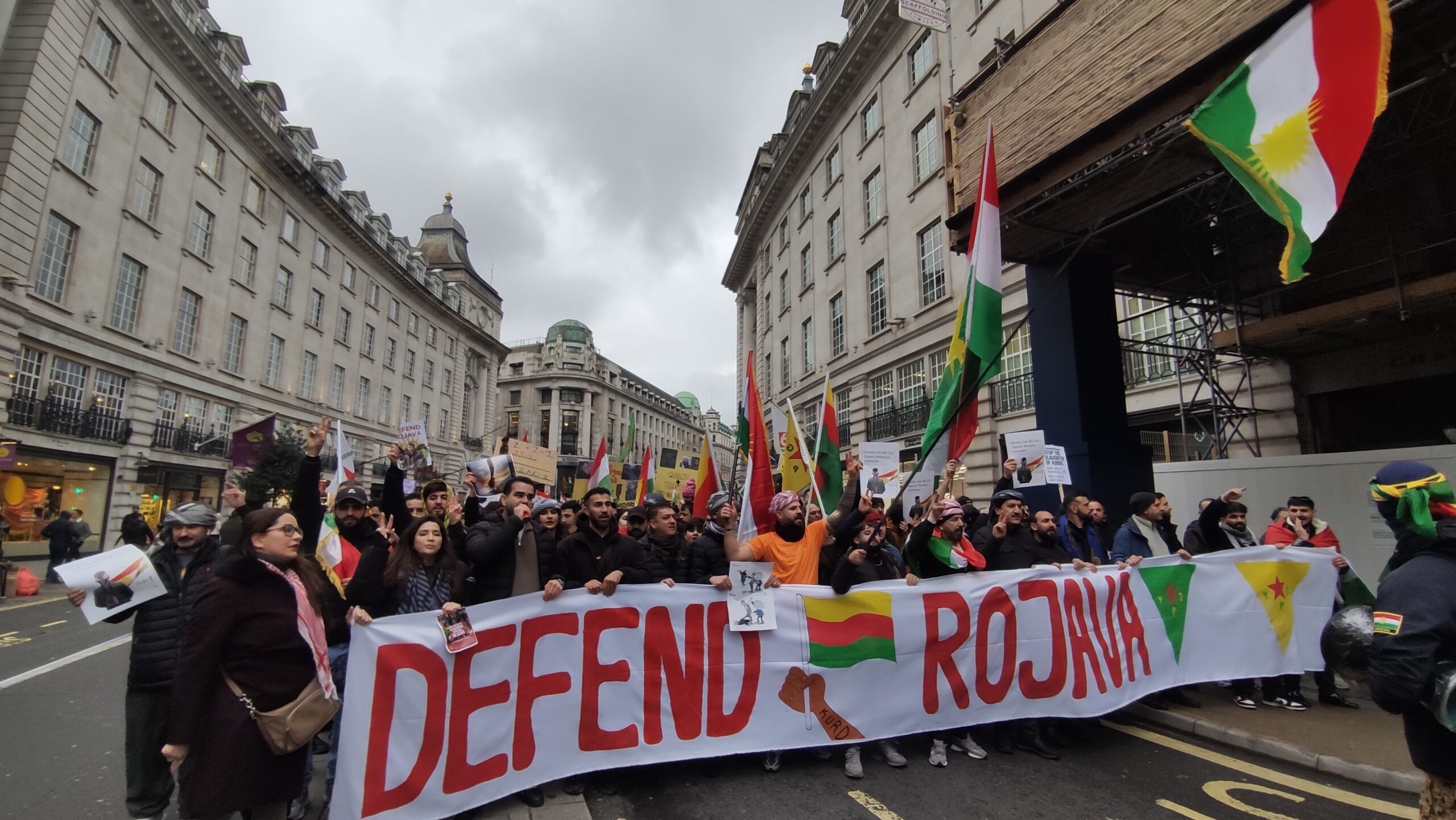
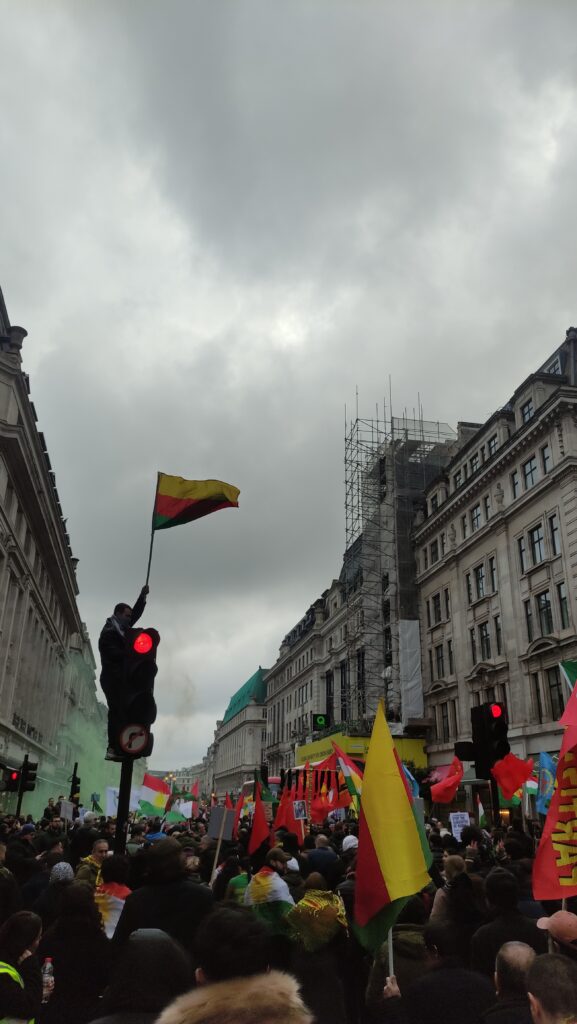
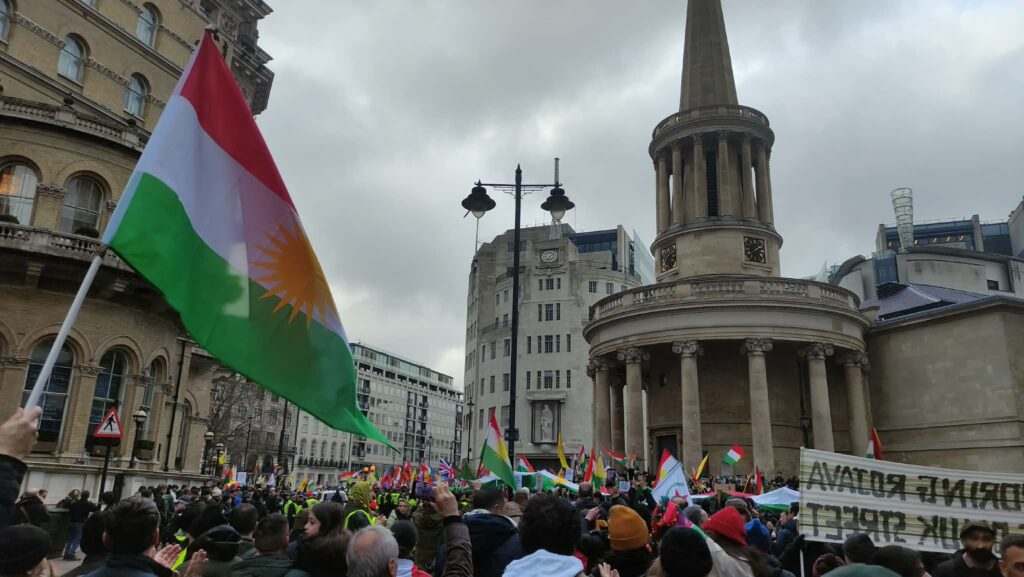
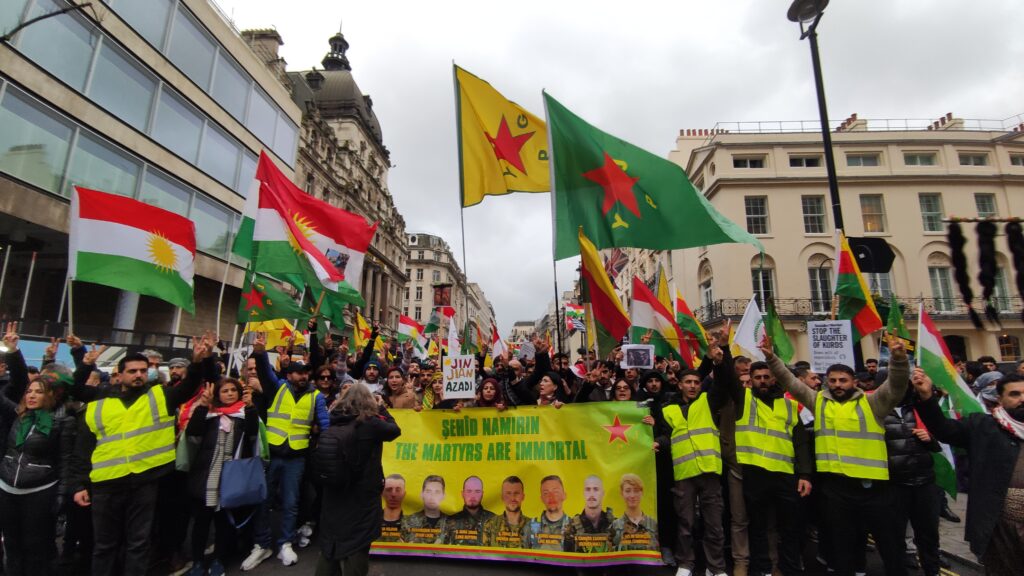
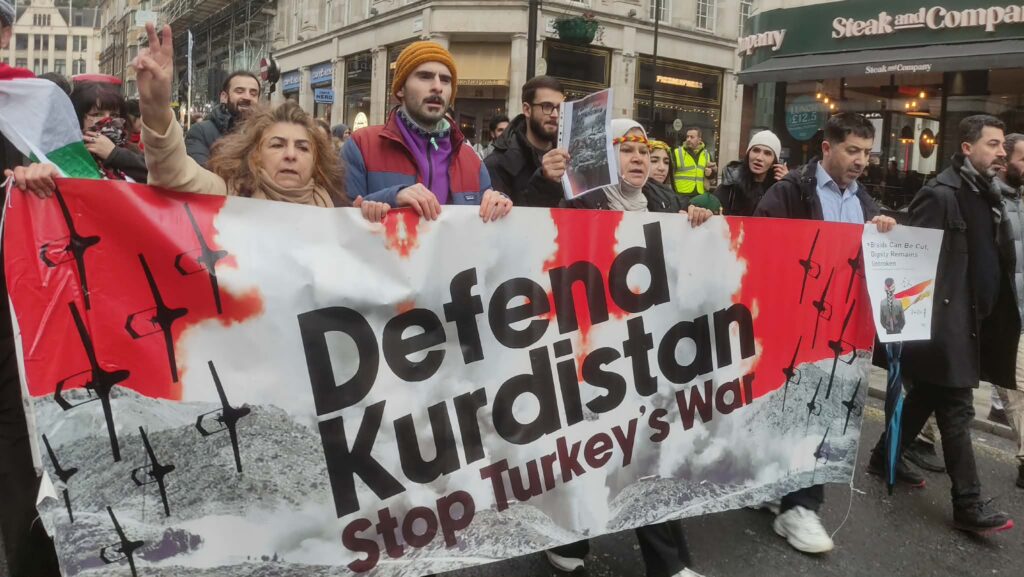
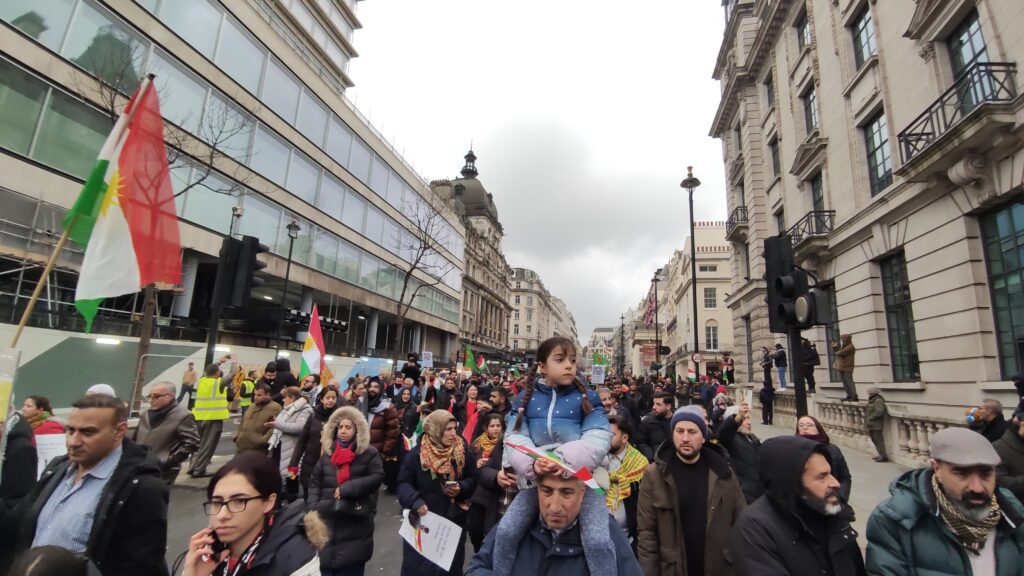
Between 20,000 and 30,000 Kurds and supporters filled the streets of London on Sunday 25 January 2026 in solidarity with the people of Rojava. Organised by Kurdish diaspora communities and solidarity networks, protesters gathered outside the BBC at Broadcasting House before marching towards Downing Street, calling on Western governments and international institutions to intervene to prevent an unfolding assault on Kurdish autonomy and rights. Passers-by along the route stopped to engage with the march, expressing curiosity and solidarity.
RiseUp4Rojava, Women Defend Rojava and the 183 organisations and 72 individuals who have already endorsed the international call, urged supporters to escalate organising — through coordinated street actions, social media mobilisation, pressure on national governments and international bodies, and demands for political and legal recognition of the Democratic Autonomous Administration of North and East Syria (DAANES).
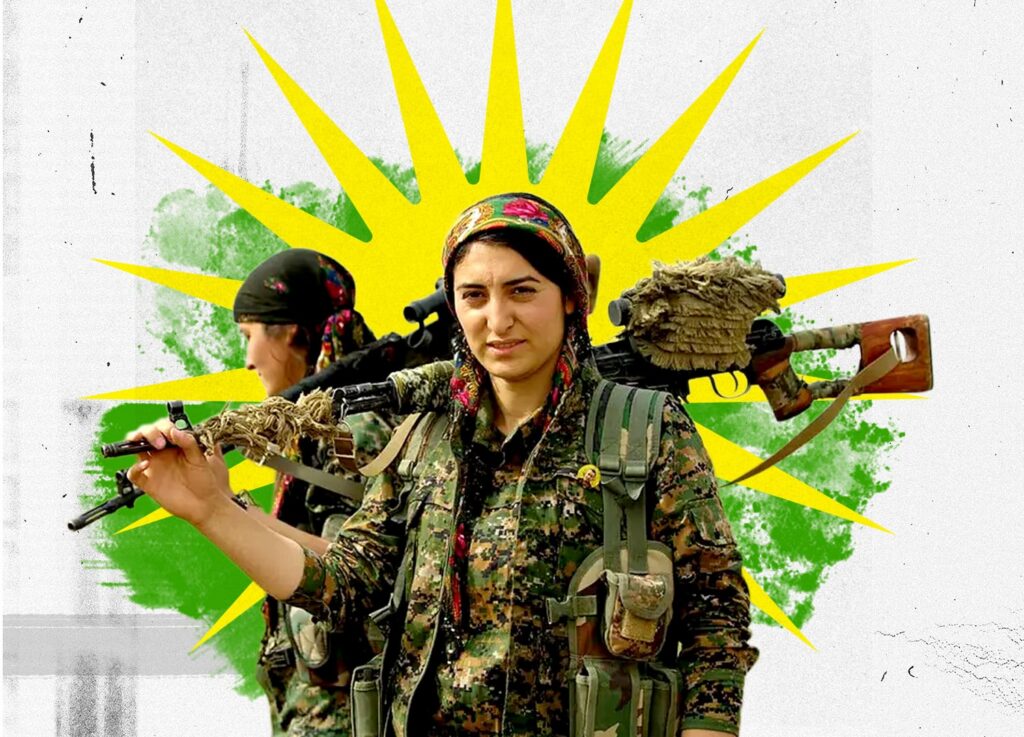
On the ground, the situation remains highly volatile. In early January 2026, jihadist forces forming the backbone of Syria’s transitional government, backed politically and logistically by Ankara, launched a rapid offensive across territory previously administered by the Syrian Democratic Forces (SDF), the military defence force of Rojava. Government-aligned forces seized cities, oil fields and key infrastructure east of the Euphrates in a matter of days.
In the initial stages of the offensive, several tribal groups that had previously aligned with the SDF switched sides, accelerating the loss of territory, including in major urban centres. Amid the chaos, ISIS-linked detainees from facilities formerly controlled by the SDF were reportedly released before being recaptured by Damascus-aligned forces.
Clashes intensified around Aleppo, Raqqa, Deir ez-Zor and Hasakah, before Damascus and the SDF agreed a fragile ceasefire in mid-January. Under the terms announced, the SDF is to be integrated into Syrian state structures, with control of border crossings, energy infrastructure and Islamic State detention facilities transferred to the central government. The ceasefire was reportedly violated almost immediately, though harsh winter conditions and tactical regrouping by SDF forces appear to have slowed the pace of the assault.
The truce was brokered by international mediators, particularly the United States and France. Washington is reported to be seeking additional time to organise the transfer of thousands of detained ISIS fighters and their families out of the region.
Kurdish-majority cities are currently under blockade, enforced by Turkish-backed militias, Hayat Tahrir al-Sham (HTS) and Islamic State cells. Displacement into remaining Kurdish-held areas is placing further strain on already fragile infrastructure and aid capacity as humanitarian conditions deteriorate rapidly. In the encircled city of Kobane, water and electricity supplies have been cut, forcing displaced families into public buildings without heating or basic services. Local sources report that at least five children have already died due to cold conditions, as tens of thousands of civilians flee ongoing bombardment and insecurity across the region. Borders with Turkey, Iraq and Iran have seen increased crossings by Kurds preparing for what many fear could become a decisive confrontation with Damascus and its allies.
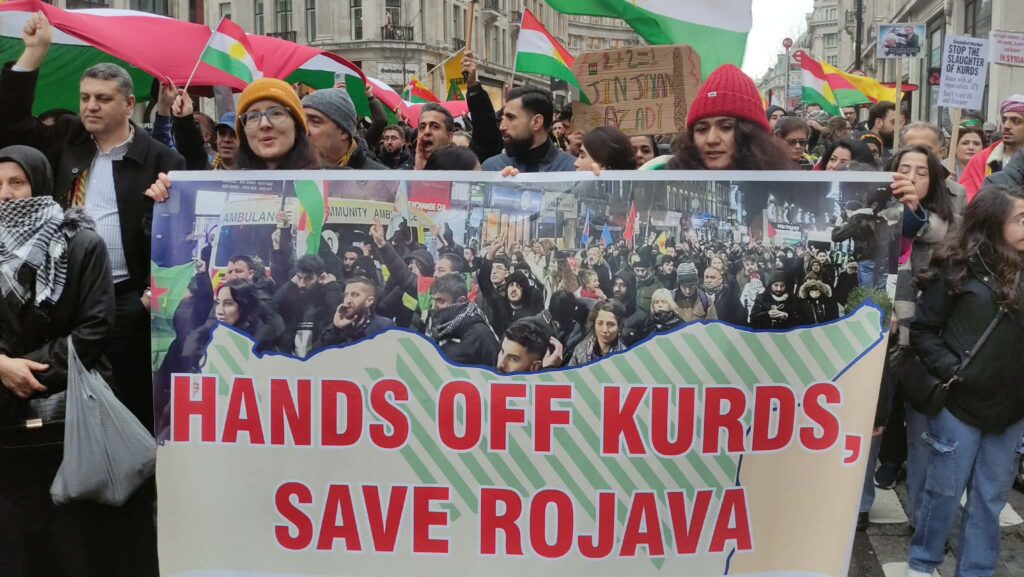
Organisers highlighted upcoming international days of action, including 26 January, marking the anniversary of the 2015 liberation of Kobane from Islamic State, and 31 January, a global mobilisation under the slogan “Women Defend Rojava“, calling on women and democratic forces to defend what supporters describe as Rojava’s women-led social revolution.
Solidarity actions have been taking place internationally, including protests across Germany, Switzerland, Austria, Italy, Greece, Spain and South America, as Kurdish communities and allied organisations seek to apply pressure on governments in an effort to avert what many fear could become a genocidal assault on north-east Syria. International networks have also coordinated several convoys from Europe, with additional groups reportedly travelling from Iraq, Iran and Turkey to deliver humanitarian aid or join the defence of the region.
____
The article published also simoultanously at Freedom News:
https://freedomnews.org.uk/2026/01/26/thousands-march-for-rojava-in-london/