This article is a contribution by Sissy Doutsiou, a member of the Void Network , to the dialogue on sex work.
Reality is so complex and social phenomena so multifaceted that we cannot analyse the entire spectrum of sex work, understand all the underlying factors, feel all the conditions, and highlight all the problems that arise.
There is no objective reality since the point of observation is never the same—modern physics taught us this. Our perspective is always influenced by a specific angle, a body, a position, a history.
Everything exists on a continuous plane of action and reaction, necessity and desire, which is impossible to separate. This is the first thing we must understand. The discussion about sex work cannot be squeezed into the dichotomy of for or against. Sex work can be pleasure but also compulsion, liberation but also entrapment, creation but also destruction.
We don’t need to hide how much pain sometimes and how many wounds open with this profession, and we shouldn’t avoid criticizing the psychological tensions lurking in sex work. Many things happen. Money, pleasure, laughter, desire, respect, and on the other hand, disgust, nerves, tolerance, even use of addictive substances to “live the moment.” At the same time, communities are built, resistance networks are created, lives are saved from poverty, despair and destitution, a way out is found to get by, studies are supported, rents, dreams. The hardest part is that all of this is simultaneously true.

What We Don’t Say
You will very rarely hear “this job traumatized me,” “I would like to say no but I need the fucking money,” “I snorted five lines of cocaine to have more pleasant sex,” “I think I can’t fall in love anymore.”
These things are whispered, if said at all, because we know what will happen. They will be used as ammunition in the war against sex work. They will be used against sex workers to create a horrifying image and to support the most conservative and violent positions so they can stigmatize, imprison, arrest, devalue, and pity people moving in this space.
And yet, all of this exists. Trauma can exist. Marginalization and alienation exist. The difficulty is real. It’s not easy work. But these don’t defame sex work. They defame the system that creates it. We want to bring to the foreground poverty, inequality and lack of choice. We want to attack this world where survival always happens on others’ terms.

The Good Things We Don’t Dare to Say
We don’t only balance between Virtue and Vice (the myth of Hercules), there isn’t only the uphill or the easy path (moralism). There aren’t only fat rich men who smell like soap and thin millionaire women who want you to rub their clit frantically for a straight hour. There are things that make sex work truly beautiful. There is love, respect, mutual care, caressing, care, conversations, confessions, hedonism, pleasure, love, meetings, networking. Sex workers, mainly abroad (America, Asia, rest of Europe) build communities that people “outside” can’t even imagine.
These aren’t communities made from theoretical slogans like “women with common interests.” They are communities made from the recipe of survival. The more experienced send lists of safe clients. They share skills, strategies, ways to avoid police, safe communication channels. They create material and psychological forms of mutual aid and don’t wait for anything from the state, NGOs and activist movements that don’t even recognize that what they do is work.
And then there’s the simple joy of sex work. Yes! So much laughter!!! Jokes, pranks, weird things. A client who makes you feel intelligent, desired, dominant. One who listens. One who thanks you as if you were the best decision of his life. During a paid sadomasochistic sex session there can be real joy. Why should we hide this?
Sex work often saves you when you’re in a difficult financial situation, if of course you’re in a position to manage to stay independent, find decent clients and move exactly as you want. This is a fact. The money comes quickly and when you need it. No professional resume and interviews required. The money isn’t ideal or stable or fairly distributed, but it’s money—this horrible cause of misery in the world, the existence of money.

And if this feeds arguments against sex work? If some feminists use it to say “so all these women are forced, we must save them, find them another job!!!!!” or also “because of all this we can’t validate sex work, there’s no free choice, these women……”
I don’t care about all that. I care about the truth. The ambivalence, the contradictions of life, the paradox, pleasure and compulsion, ease and boredom, the gift and guilt, emotional security and expensive lingerie. Isn’t this how our entire life is? The beggar and you with shopping bags from the boutique, the psychopath on the train asking you to help him and you continuing to scroll on Instagram or posting a photo of yourself on Facebook, the forced 14-hour workday, wage slavery and the spilled blood of Chicago’s May Day. Life goes on with workers and employees going back and forth to work morning and night. I care about understanding injustice and the causes of its perpetuation. This is the world!!!
Suddenly we have to solve the problem of sex work without even taking into account that some people choose this profession freely just as everyone chooses a bunch of other forms of work “freely.” Do we all really choose our jobs “freely” in the end?
I understand, the first thoughts are that the body becomes a commodity, yes but it’s my body, there is the decision, the choice to dispose of my body for as long as I want and where I want. But, the second thoughts are that this way love is wounded, yes but other times this is how it’s born, this is how it’s valued, this is how it’s recreated. Life is complex.

Things That Don’t Fit on Posters
There are sides of sex work that we don’t want to say even to our own feminist group. There are women who have sex for money while having no home. There are sex workers who pay bills, rents, food, while husbands have “disappeared” from their responsibilities. There are girls who were left orphaned, boys who haven’t chosen their gender yet, girls whose confidence is developing.
And what does the state do? It imprisons them in many cases, especially in America. It puts them in categories of its own invention. It calls them victims while treating them as criminals. Laws to combat pornography in practice push sex workers deeper into illegality. More secret dates, more dangerous places, less access to medical care, non-existent labor rights. This is not called help. This is the logic of stigmatization dressed in moralism.
Motherhood, studies, the beauty of life, degrees, happiness and sex work are not opposite concepts. People don’t want to be ashamed of their choices, don’t want to be oppressed and blackmailed, don’t need moral rules, suppression and policing. And yet not only the system of domination but often even libertarian spaces treat sex workers as victims, as suffering bodies, as sexual machines that are oppressed and not as people with dignity, will, ability to choose and enjoy. And yet, among all these sex workers everywhere in the world there are also unemployed people looking for ways to pay rent, there are sociologists with their PhDs, there are trans women and mothers with their happy children, and tender happy beings and artists and angry rebels, and people full of energy and will for life, and students and queer people and every kind of subject like in any workplace, people who don’t want to be ashamed of their choices, need support and care by all of us.
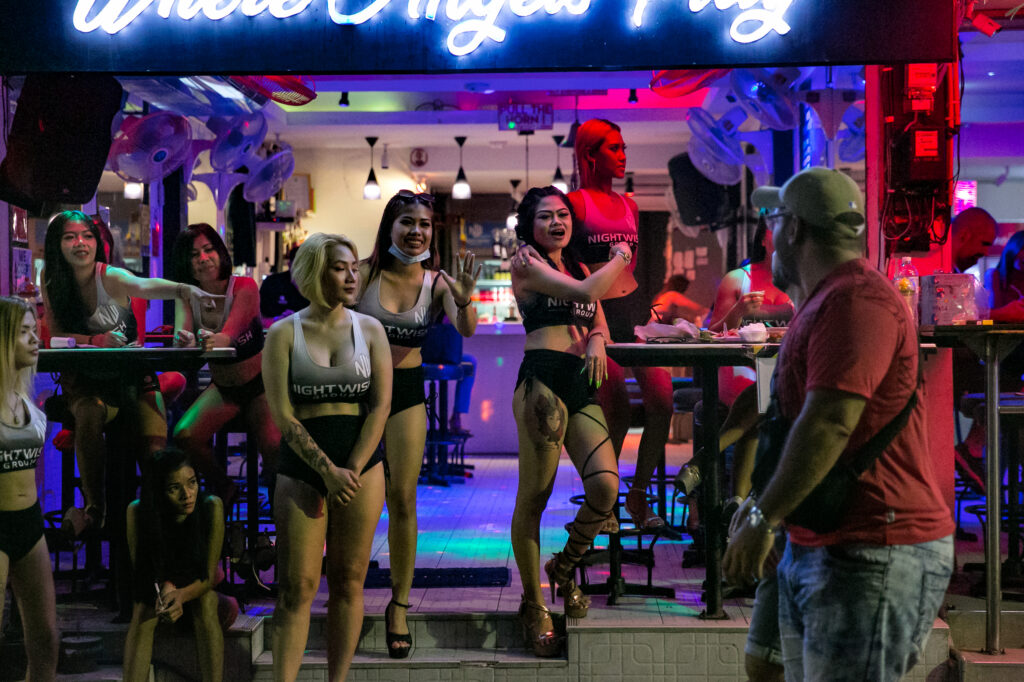
At this point I must be clear. Me the writer of this essay I am a white woman with some social privileges. I speak from my own experiences, my travels and meetings with people on 5 continents and mainly from my discussions with the anarchist movement of sex workers and trans women in Thailand and anarchist sex workers in the USA.
Racism and police violence, borders, authoritarian regimes and migration policies, conservative views and state mechanisms produce social exclusion and personal tragedies worldwide. Sex workers from Latin America, Asia or Africa perhaps face something that is not at all the same as people in Europe or America, more obstacles, more devaluation, more restrictions, more violence. The violence they experience is first racist and then violence against sex work. And when we talk about “right to choice” or “body self-determination,” we know that these words are not enough for those living under the racist gaze, daily police violence and colonial policies.
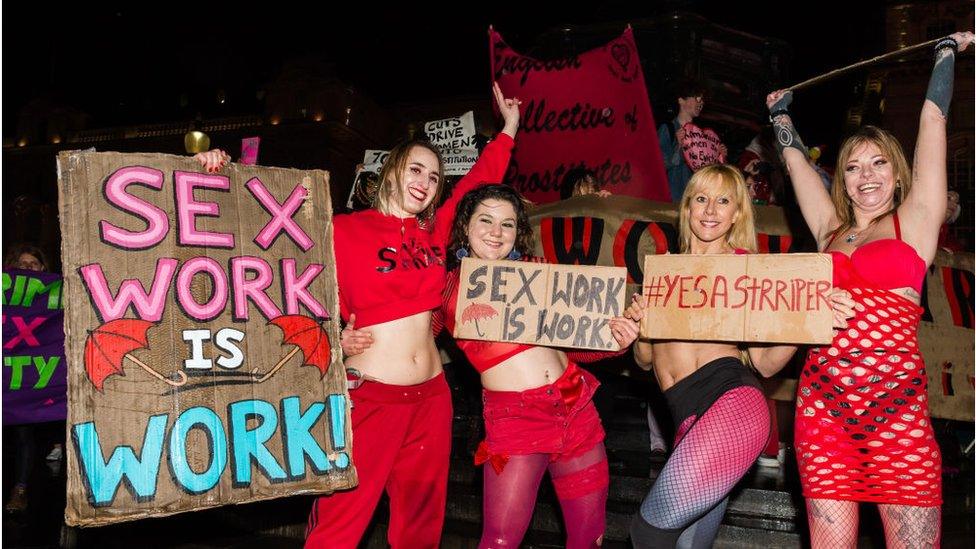
The movement supporting sex workers spreads across the world. Since white men dominate the planet, it is given that white sex workers have greater access to media, publishing houses and communication platforms. Sex workers who are migrants and poor share their experiences and views on life with us much more difficultly. Recognizing this is not petty-bourgeois guilt and shame, it is political responsibility. All of this is not just lived experience—it’s also public discourse. In this direction, open meetings, research, articles, lectures, texts, public events, films, documentaries are necessary. When we talk about sources, references and networks, we are not just talking about academic articles. We are talking about how the information produced by sex workers themselves, collectives, activists, communities, but also medical and social sciences, can be used to protect and spread the discourse of the subjects themselves.
In many fields from technology to public health, analysis of sources, networks and influences shows how knowledge is built. Which voices are heard, which are hidden, which fundamental texts shape our political views or direction of legislation? The same happens with sex work. If we look at which texts, which references, which stories dominate the public discourse about sex work, we will see how often the sex workers themselves are absent.
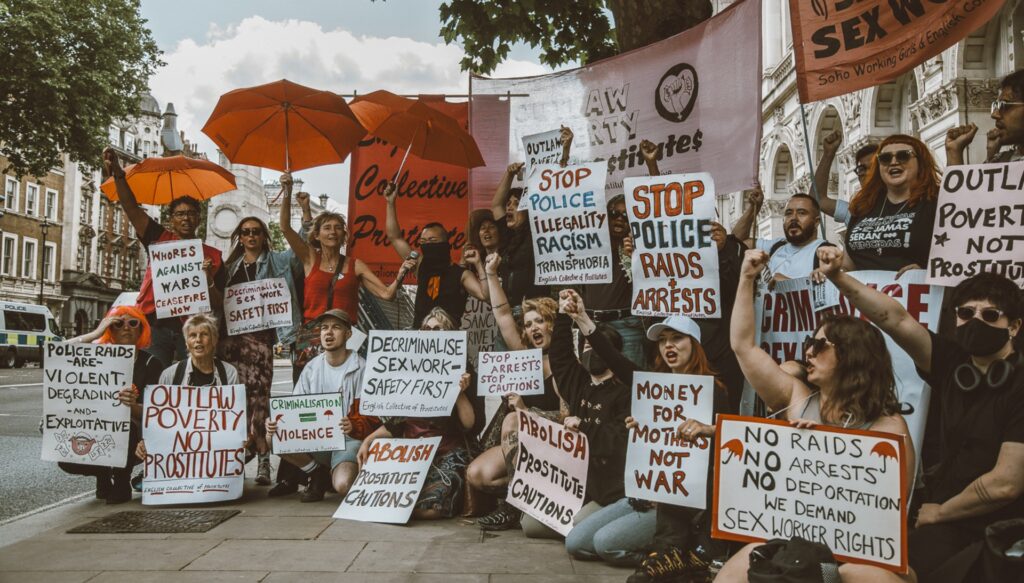
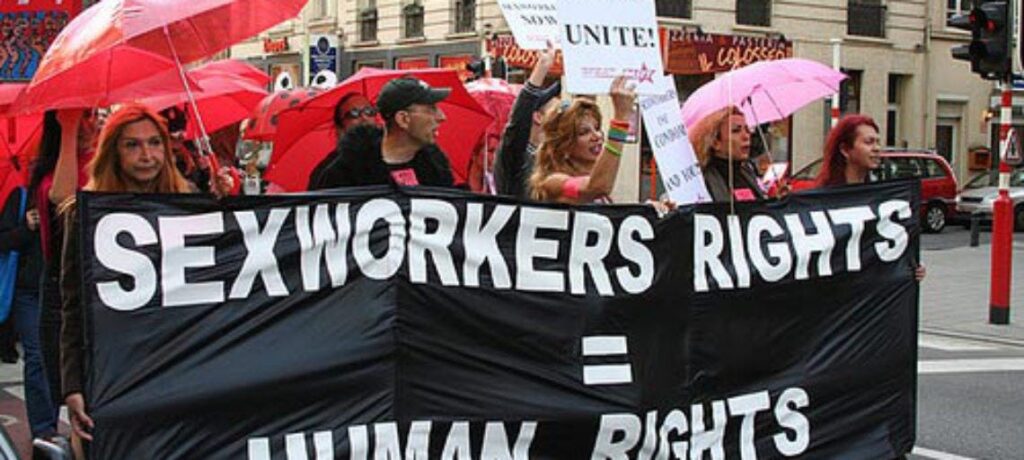
However, in many countries and in many studies, we observe something repetitive. Where sex work is decriminalized, where it is recognized as work, where sex workers organize collectively, where they participate in decision-making, violence decreases, health improves, the safety of the people who work in this space increases. The feeling of shame and the stigma of the “poor unfortunate prostitute” or the “lumpen element that had no other choice” weakens.
Community groups, unions, sex worker collectives have shown in practice that when sex workers themselves organize their self-protection, when there is access to doctors without fear, when there are labor rights and sex work can be discussed openly without stigma, when needs and desires are openly recognized, then abuse and sex trafficking decrease, exposure to sexually transmitted diseases decreases and the power of acceptance, kindness and dignity multiplies.
On the contrary, where criminalization and illegality prevail, stigmatization and saviorism, there is more violence, more police harassment, less access to health services, more darkness. Policies that see sex workers as subjects with voice, free will, choice and rights improve the lives of sex workers. Policies that treat sex work as a problem to manage attack and kill in a subterranean way the sex workers themselves.
Would There Be Sex Work in a Free World?
If there was no capitalism, would there be sex work? If there was no patriarchy, would there be pornography? Some say no. They argue that all sexuality as we live it today is a product of patriarchy, market, oppression. That all our desires are shaped by this system.
Some of us say something else. That there is something even deeper. A sexuality that is not only a result of coercion. Something erotic, spiritual, creative, that wants to be played, explored, shared. This something would exist even if we tore down patriarchy and capitalism tomorrow.
I don’t believe sex work would disappear in a free world. I believe it would change radically. It would stop being work out of necessity and become something like ritual, play, service, creation. Something that wouldn’t have fear, poverty, dependence in it. Something we wouldn’t need to call work in today’s way.
But we don’t live in that world. We live here.
Here, Now, in This World
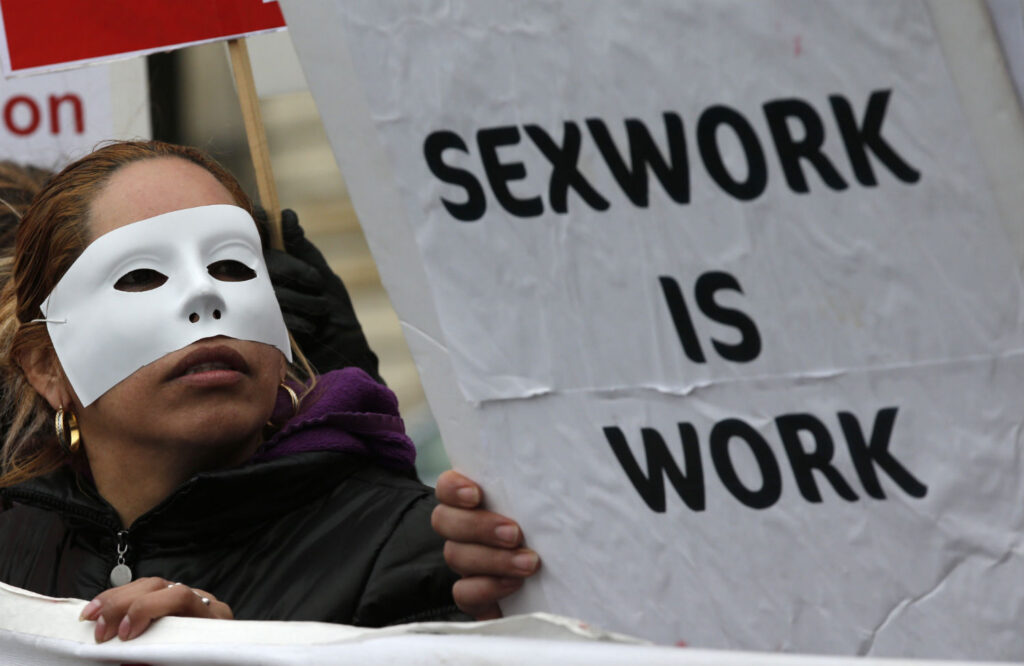
What is needed is not saviors, not feminists who tell us there is no free choice in sex work, we don’t need women who are afraid, terrified by this choice as they would be terrified by a young girl on LSD trip. We need to support the rights of sex workers. Protection, legal recognition of this work, access to health services without fear and stigma, the ability to report violence without risking arrest, the ability to be heard about the difficulties and limits of the profession without it becoming a weapon against sex work itself, the ability to appreciate the ease, eroticism and friendships that arise without shame.
We want communities controlled by sex workers. Networks created by sex workers. Research that includes sex workers as subjects with opinions, not as cases. Policies written together with sex workers.
The principle “with us and not for us” is not a slogan for posters. It is a political stance. It is a demand. It is the refusal to let others decide about our bodies, our lives, our desires.
It doesn’t end here. Or rather, it shouldn’t end here. What begins with sex work—resistance, the creation of new communities, the invention of ways to survive and tenderness in a violent world—doesn’t stop at the boundaries of the profession. It extends to other struggles, other communities, other uprisings.
This matters. Not to convince that sex work is good in a one-dimensional way, but to admit the complexity. That it is simultaneously difficult and liberating, traumatic and vital, dangerous and tender. That we can stand in this contradiction without disappearing.
Don’t be afraid of paradox to understand the world. There, exactly there, lies the real power, in the moment when we tell the whole truth not just the part that suits us, but also what hurts, and what redeems.
Sissy Doutsiou is a member of Void Network, actress, poet and writer. You can read more of her essays at her Substack page The Erotics of the Resistance