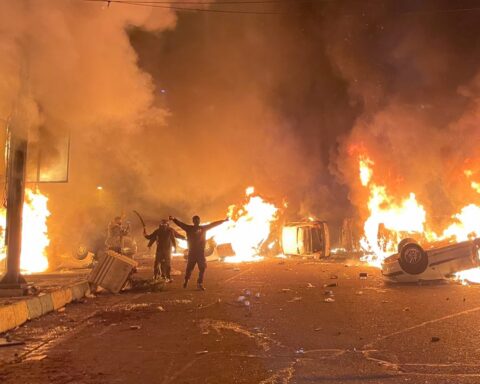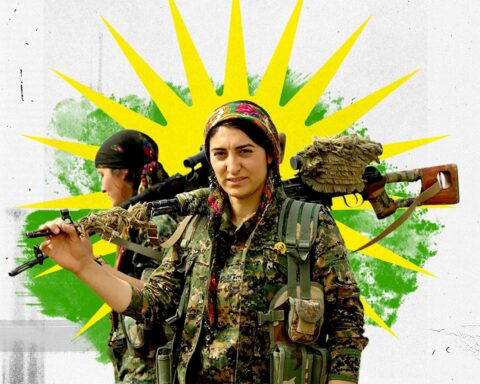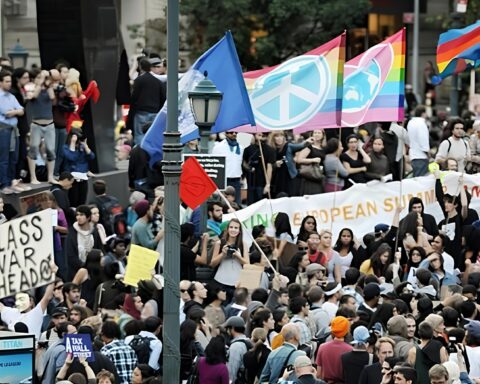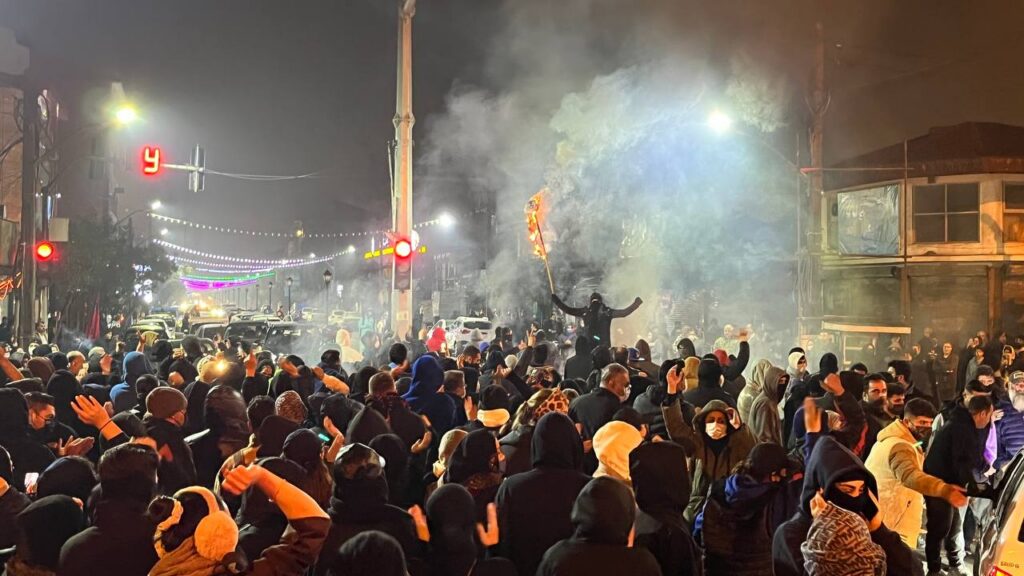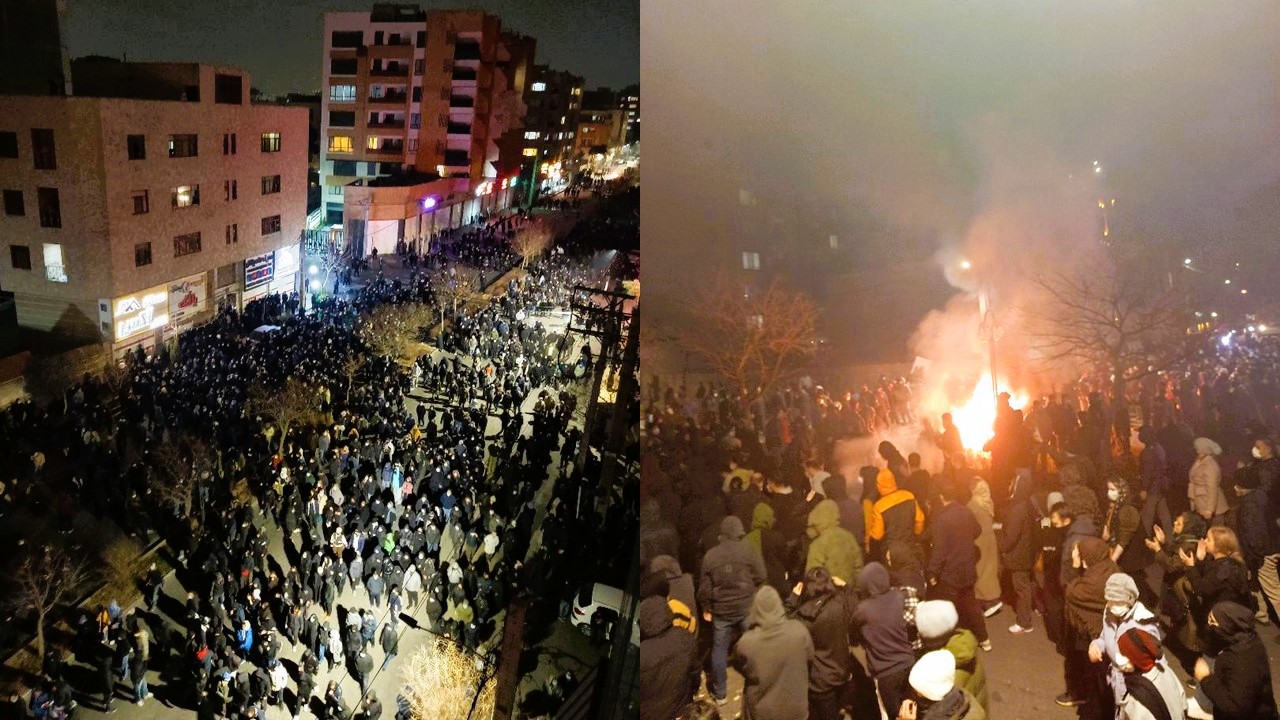
Regarding the uprising in Iran, another schism is becoming apparent within the movements in the West. A schism that escalates into verbal confrontation within an extremely feverish, oppressive, and competitive environment.
Written by Thanasis Kosmopoulos / RisingUtopia– Athens Greece
Translated by Tasos Sagris / Void Network
If at least those of us who express opinions from the ramparts of the movement could manage to free our thinking from the feverish compression of these times and from the competitive-narcissistic culture that has permeated us—perhaps without our even realizing it—we could produce results through fruitful disagreements.
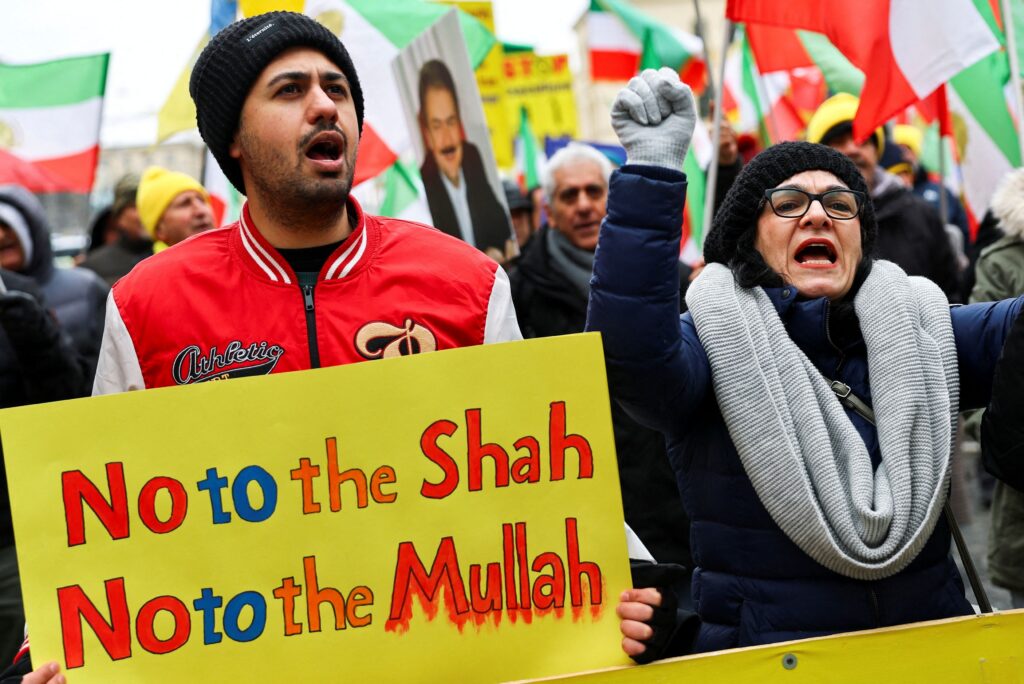
The schism lies in how we view the situation. Some prioritize the significance of the uprising in Iran as an expression of liberation from theocratic power, with poverty and oppression as the main causes, while those “on the other side” prioritize the geopolitical dimension, interpreting the uprising as instigated by American-Zionist imperialism in order to undermine the theocratic regime and restore the Pahlavi dictatorship.
The fact that each side focuses only on one extreme (the uprising from below), while the other focuses on something entirely different (the uprising as planned subversion), taking positions at the most extreme poles, shows how much competitive logic and self-promotion through disagreement has infiltrated the movements—even among people who are organized and know how to discuss things when they meet in person. So like imprisoned mice, we tear each other apart, each one entrenched in their own narcissism.
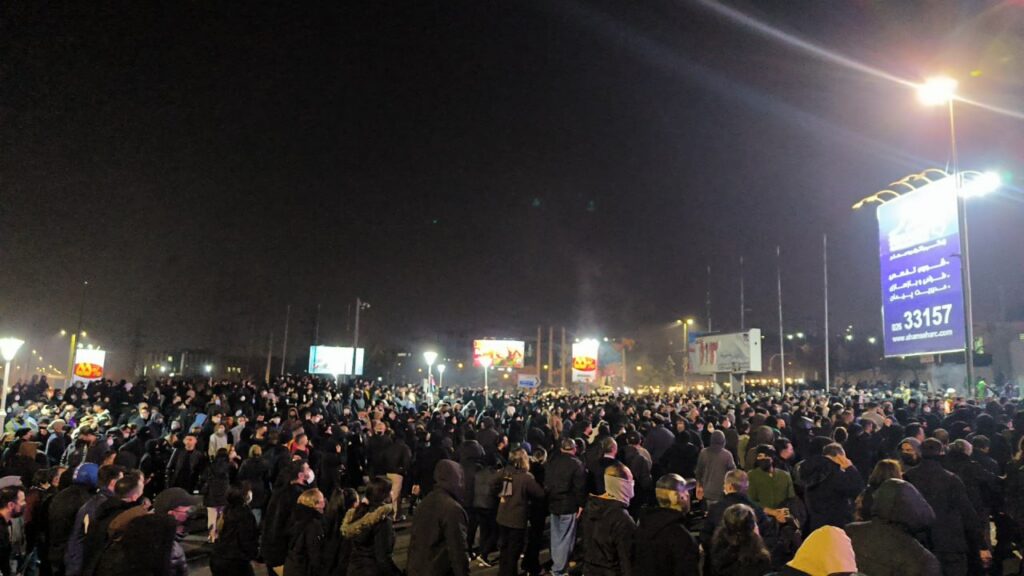
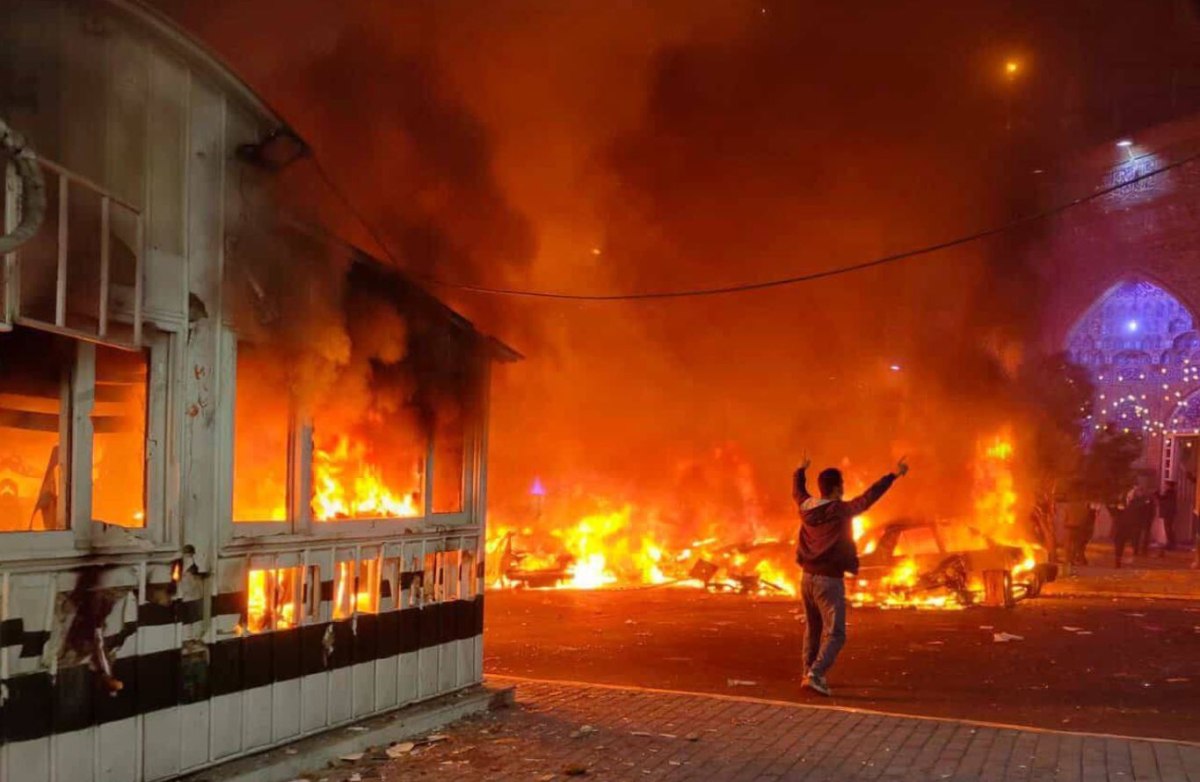
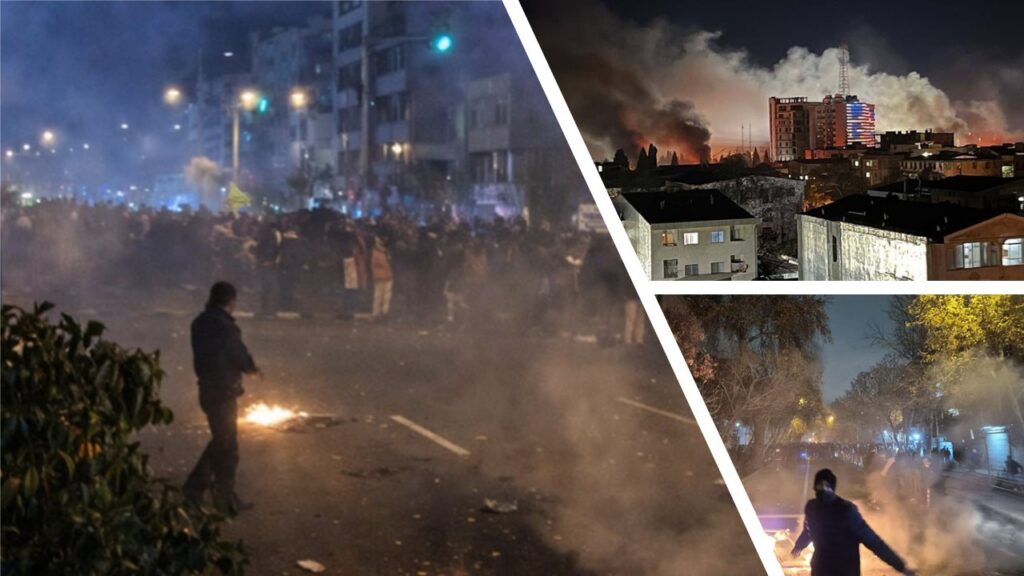
Setting aside, however, the “psychodynamic” fields of the outlet where this text is being written, we must take a position on the events in Iran at this time. And the position states that a mass social uprising is a reality where things are suddenly disrupted, and for the umpteenth time, in the relationship between society and power. This mass-scale uprising with hundreds of dead and wounded cannot be happening out of nowhere through manipulation by an external actor. The Americans are experts at dictatorships, at abductions, and at coup practices for changing regimes that didn’t suit them, even in mini-uprisings like Maidan, which was nothing more than the surface pretext for state overthrows that had already been prepared on the Ukrainian political stage long before.
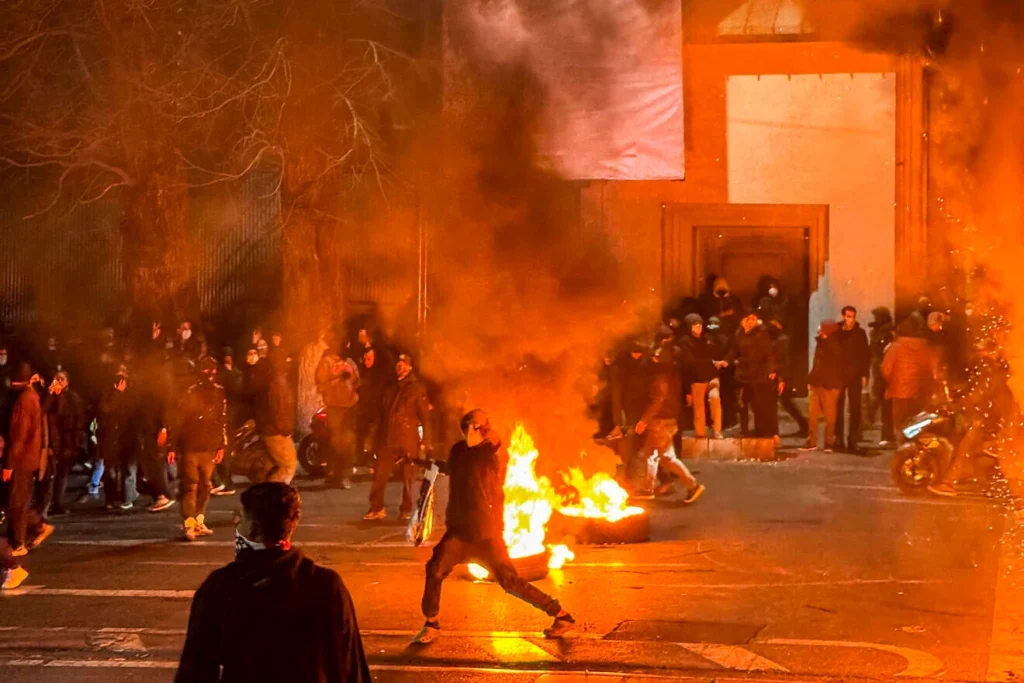
Here it’s not the same as Ukraine. No foreign power can “stage” a mass social uprising in Iran with this altar of blood. Much less transform it so that a society of 92 million consents to the change from 47 years of theocratic power to the dictatorship of any Pahlavis. In Iran today, anti-American sentiments are far more prevalent than anti-regime ones. The US knows that even with a more easily successful military coup, Iranians would hardly accept American hegemony. The possibility of failure of an instigated practice is very serious.
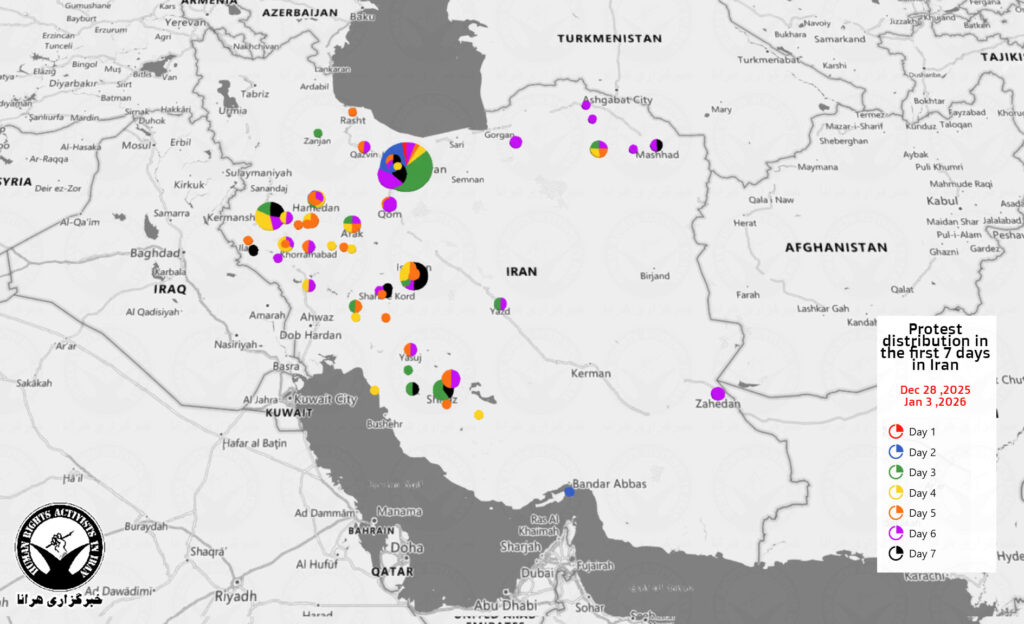
There is a burden that moves Iranian society to risk their lives in the streets of Iranian cities. And as always, one of the main causes and triggers of major uprisings is the sudden decrease in income and the absence of freedom. Then no one can downgrade a mass social uprising because it is spontaneous. It is not instigated.
Some commentators, highlighting the consequences of the chronic embargo on the difficult position of the poor strata, again attribute responsibility for the social uprising to the West and its sanctions, as indirect “manipulation” toward uprising. Yes, this argument also has a basis, but the embargo doesn’t mean that the state doesn’t have the ability to find a way to fix this problem. After all, Iran has very close relations with China, participating in the Shanghai alliance.
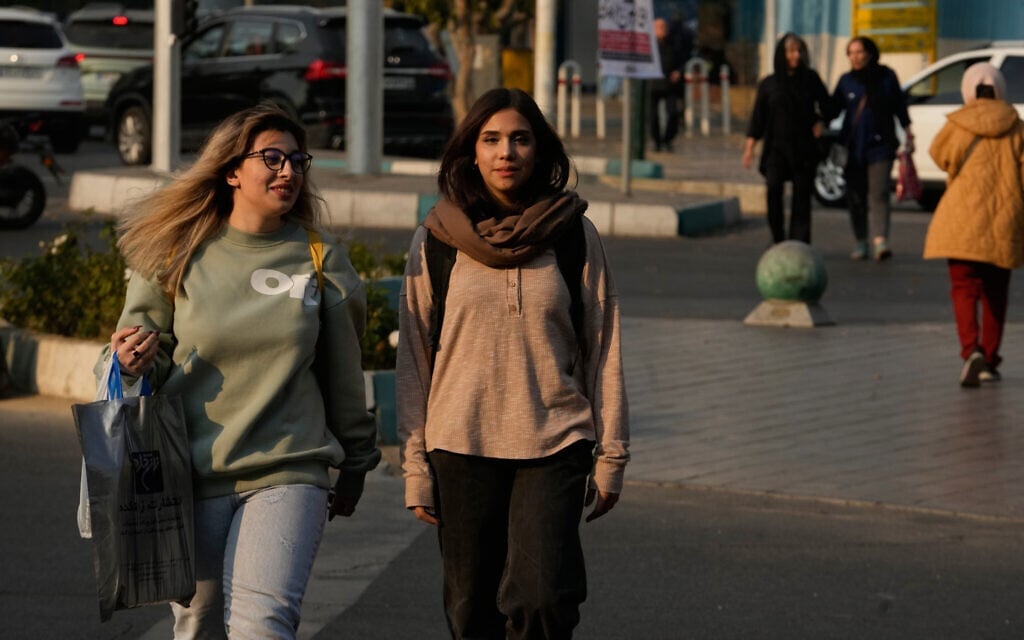
So here there is an issue: from which perspective do we see things, and from which perspective are things actually happening.
Anyone who wants to maintain an anarchist/libertarian political identity must analyze an uprising from the perspective of the insurgents.
Freedom, the human being, the community, society—these are priorities, values, ethics, a way of seeing things. Even if geopolitics weighs more heavily on events as in Ukraine, we as libertarian anarchists must see the sufferings of societies affected by this war FIRST! The possibility of intervention by the social actor FIRST! This is the imperative of our worldview. This is what made us be with the Palestinians FIRST! We are with the Palestinians and not with their flags. This is what makes us be with the insurgent Iranians FIRST! And not with the flags of the state they are subjects of. This is our perspective. The ethics of our values above whatever geopolitical correlations.
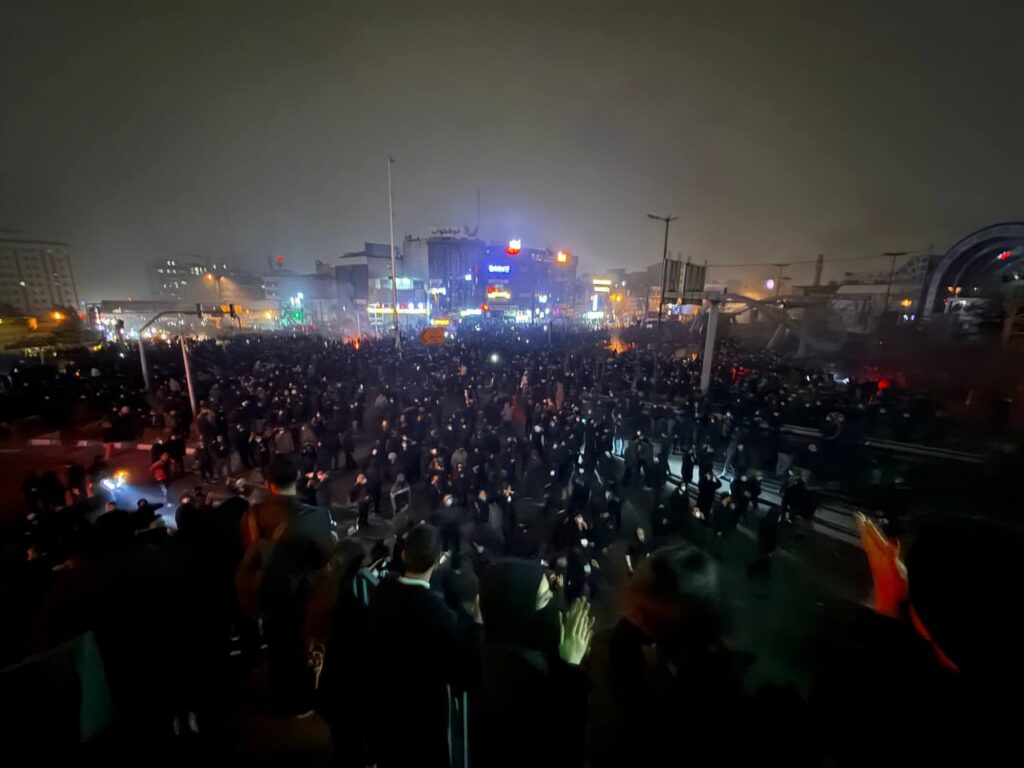
Conversely, in the case where we view this uprising from a geopolitical perspective, it is inevitable that this downgrades the insurgents, perceives them as manipulated pawns, insults people who are giving even their blood in the struggle against the state’s forces of repression. With this logic, no uprising can fail to be instigated, since all uprisings occur under active geopolitical conditions. And the social uprising for the police asssination of 15 years old student Alexis Grigoropoulos in Greece 2008 was considered by some to be instigated by Russia while by others by Turkey. I don’t think this is the way that corresponds to the perspective of all of us who are participants in the cause of social Anarchism. I believe that by focusing on geopolitics, we have internalized a managerial conception of movements that belongs to the dominant logics of “mass management,” as well as to the detached games of the geopolitical chessboard of power relations.
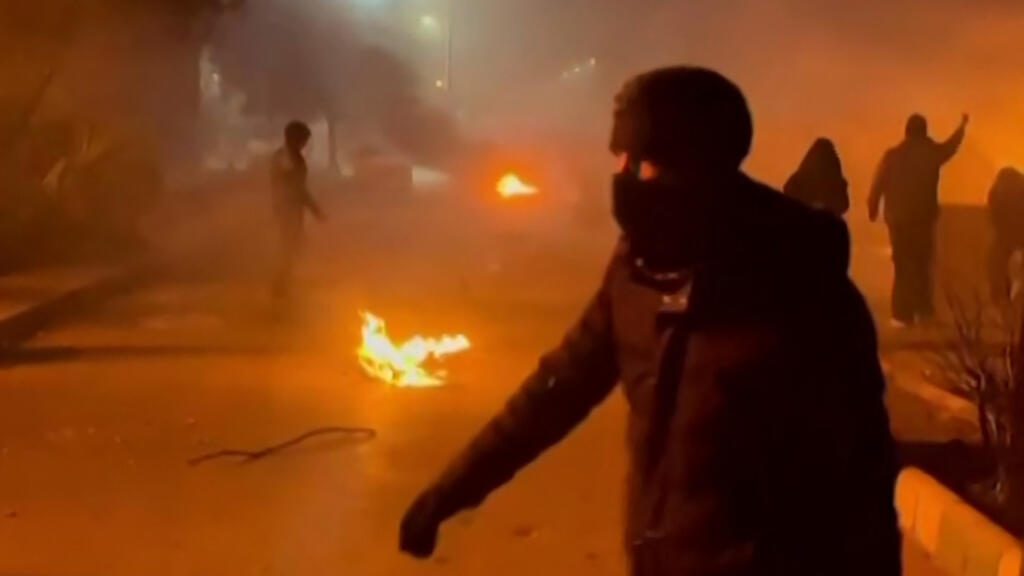
Explaining the stance of many comrades on social media, I believe that during the previous period with the genocide in Gaza, some of us, beyond the historical dimension of the Nakba, belatedly discovered the geopolitical dimension of things. The tragedy of the genocide not only brought American-Zionist aggression into the frame of our political critique but also quite rightly targeted it as an axis of evil—a now established conception that is confirmed by “the Trump reality” every day.
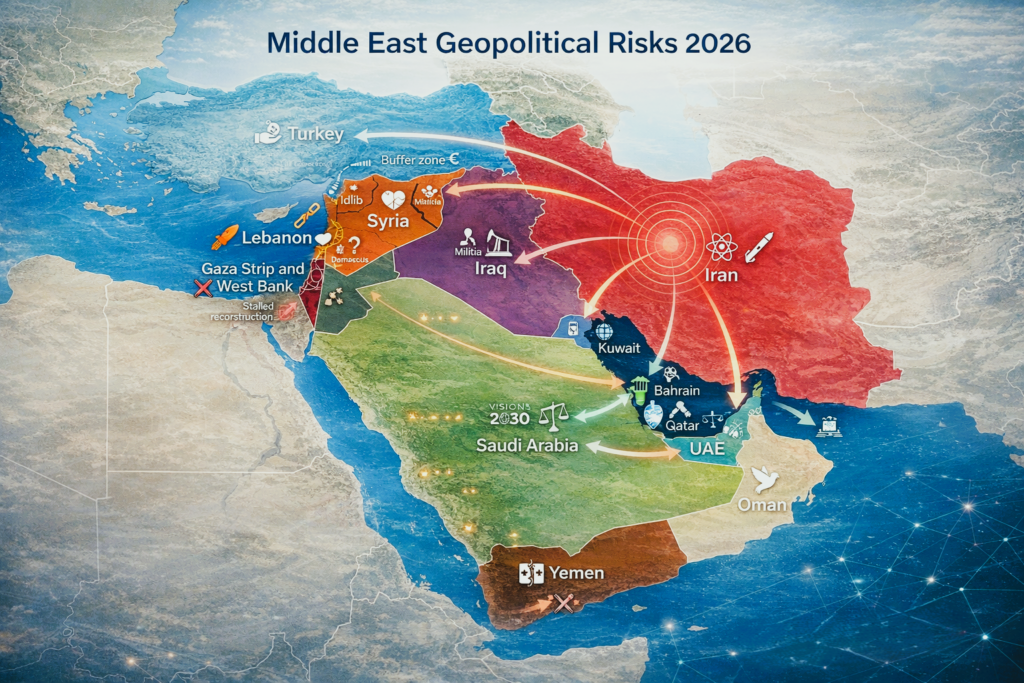
Consequently, Gaza opened a new chapter in our political understanding, a dimension that the older ones among us had taken into account anyway, but which the younger ones didn’t have, since the social movements barely dealt with geopolitics. This new ‘discovery’ was received as a revelation, when in reality not only is this far from true, but the opposite may occur: this newly acquired analytical tool we’re so eager to showcase can actually blind us even more through our over-idealization of it. This happens because many of us treat what we previously ignored as a ‘revelation,’ when it’s actually something very old and quite leftist in origin. Because an analysis that puts societies on the margins, devaluing them as absolutely controlled and manipulated, that if it doesn’t identify them with states considers them levers of geopolitical interests, is nothing but a leftist analysis derived from the spirit of Stalinism, and later during the Cold War era.
Let’s stop “reinventing the wheel” by idealizing “our new tool” because of our previous ignorance. This way of perceiving things is wrong. Let’s do some introspection to see all those “patterns” that function permanently in our understanding, and let’s rid ourselves of them, if we want to become dangerous to the State. It’s a problem when geopolitics takes precedence over the societies. The superpowers, the regional powers, the states and their moves quite logically come to the center of our perspective through the deeper desire to see the genocidal punished, with the consequence, however, that we downgrade the subject that interests us, namely that of emancipatory uprising or the corresponding social revolution.
I would say then, recognizing that in the historical time of an uprising, the geopolitical dimension also takes place—it’s quite unlikely that Mossad units are not in the field—we must focus on what is primary, which is nothing other than solidarity with a society that is rising up for a better life and for its freedom. This in itself has value. This is axiologically our libertarian way of seeing reality, without ignoring the economic, geopolitical, religious, cultural, or historical dimension of issues. Giving honor and respect to the culture of the people of the East, divesting from our critical stance any colonial Western privileges.
In conclusion, being primarily interested in the stakes of “moving” societies does not preclude taking a position on geopolitical stakes but also on every other dimension of issues. First and foremost, we are interested in the people who are rising up and the success of their struggle for a better life; secondarily, we are interested in geopolitical conflicts, which we judge primarily based on what’s good for societies, which in reality creates that anti-colonial, anti-imperialist value code.
Yes, today American-Zionism is the matrix and source of state terrorism, neo-fascism, and wars. It is a source of oppression and misery and subjugation of many societies around the world. We will not divest ourselves of our value code by supporting its opponents and raising flags of oppressive regimes on our otherwise anarchist social media profile. Our stance cannot be determined by geopolitical dynamics, nor by the hatred we have for opponents. The opponent of my opponent cannot be my friend.
Our value system has at its center social revolution for freedom, common ownership, equality, horizontality. That is, social emancipation, which like a polar star forms an axial direction in a straight line. Imperialism, colonialism, nation-states are forms of oppression and exploitation. They can even coexist. We too can stand against them, being critical without betraying our principles.
In this way we must meet with the struggles of Iranians as well as all those who rise up against the state/capital system.
___
Written by Thanasis Kosmopoulos / RisingUtopia– Athens Greece